For thousands of Canadian soldiers, the Second World War was not just about major battles, as it deeply marked them in other ways. Courts martial records are a surprising source of information about how the war affected the daily lives of these men. At the heart of every case brought against a soldier was a real person, with their own fears, flaws, and humanity.
The war’s impacts in the courtroom
The Second World War generally conjures up images of D-Day landings, intense battles, and famous generals. Yet the daily reality of ordinary soldiers played out in places away from the spotlight. This human dimension is captured in a surprisingly rich yet little-known source of information: the courts martial documents of soldiers in the Canadian Army.
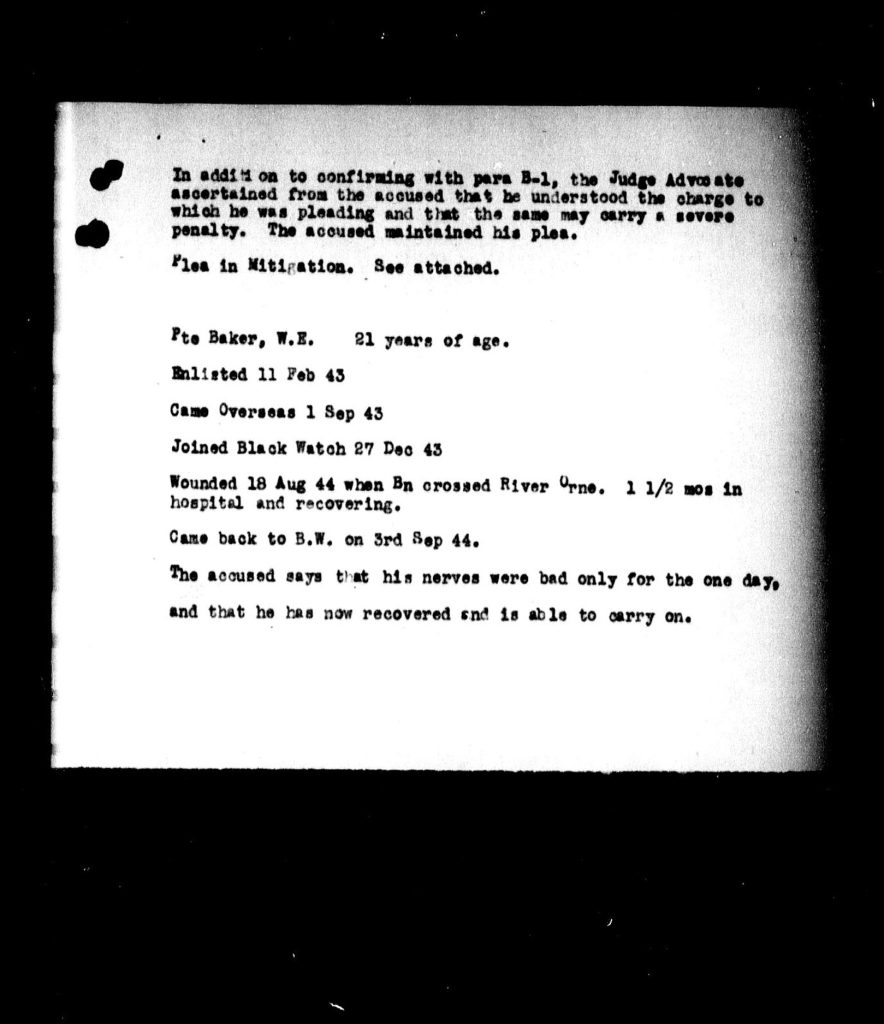
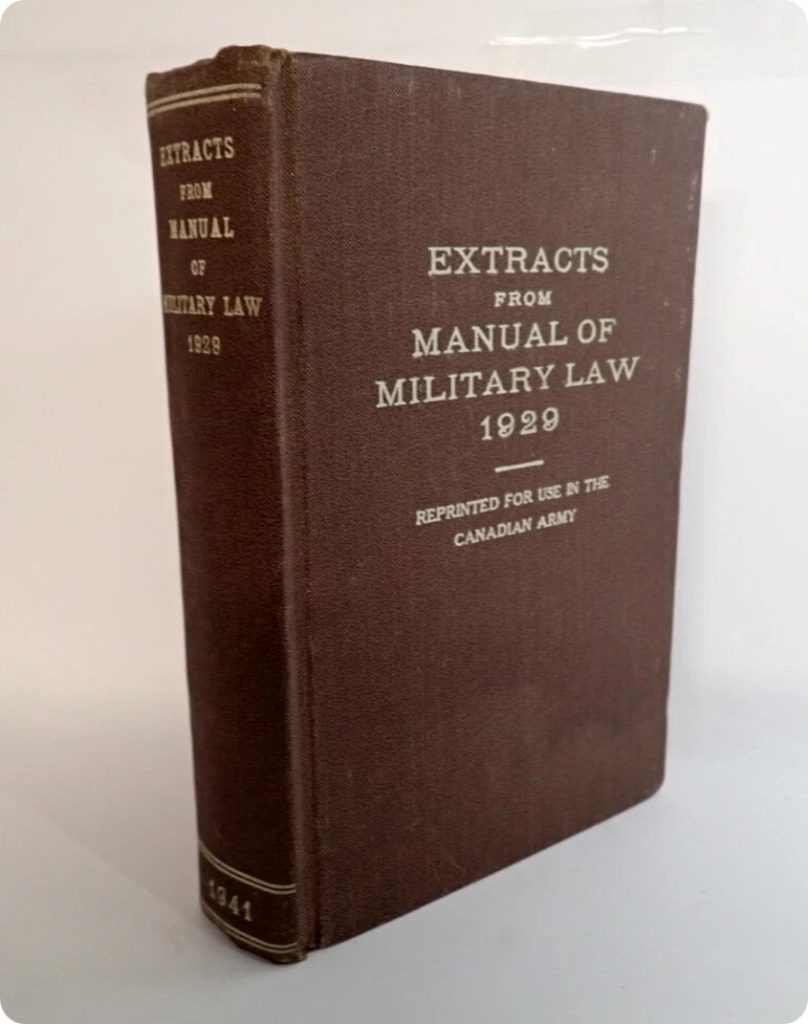
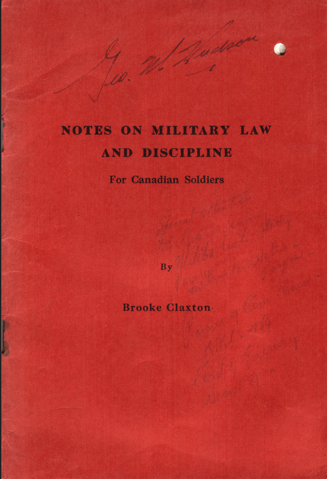
Now fully digitized, these records are available online through the Canadiana Héritage portal, which provides access to thousands of documents held by Library and Archives Canada. This collection delves directly into the testimonies, depositions, and decisions that shaped these soldiers’ lives and offers a unique window onto their human experiences, mistakes, fears, and shared bonds.
Every accused soldier had to cope with circumstances that often went far beyond anything he could have imagined when he enlisted. Military history is not just about strategy or logistics: it is also about the struggle of men simply trying to hang on every day.
Maintaining discipline amid expanding ranks
In 1939, the Canadian Army numbered only a few thousand men. Within months, it had ballooned to a force of several hundred thousand troops, who were recruited from cities, towns, farms, and factories and deployed overseas. Many of the young Quebeckers who enlisted had never left their parish before being sent off to training camp.
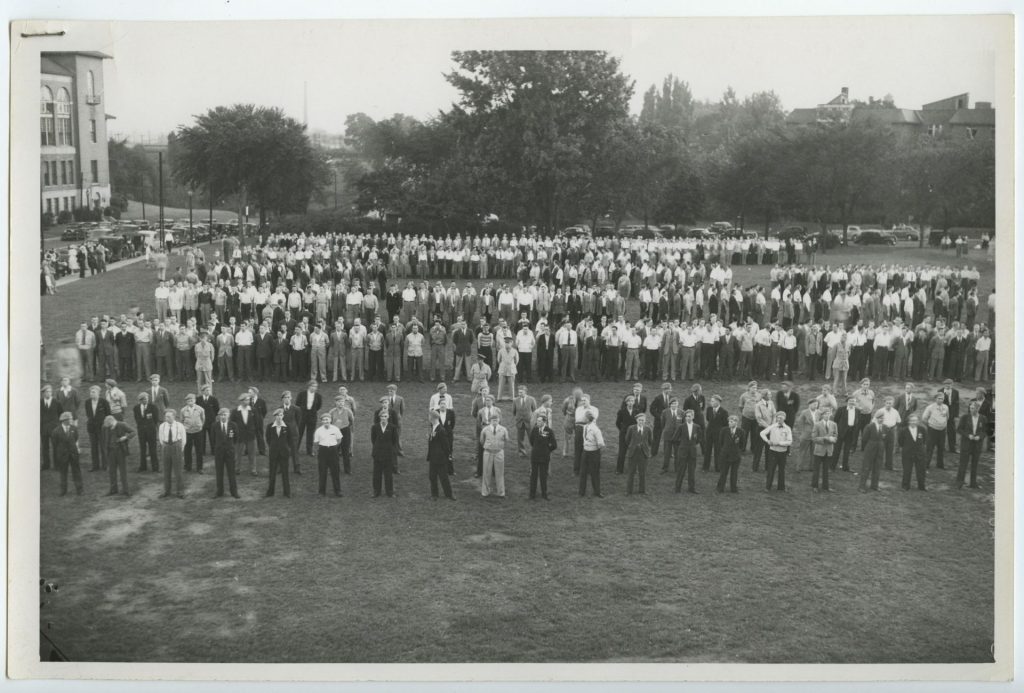
This rapid transformation came with immense challenges. Many of these recruits—who were often inexperienced and still in their teens—had to be trained, fed, equipped, and managed. Military justice was a key mechanism to maintain order and cohesion while preventing a deterioration in discipline.
However, beneath the rigidity of these rules was a system often torn between the need to punish and a desire to understand. Many cases show that legal officers—who acted as defence counsel—were deeply concerned about the soldiers’ morale or health and would argue for a reduced sentence or second chance. Discipline was often meted out with empathy and even compassion.
Going AWOL: An offence and a symptom
Absence without leave (AWOL) was the most common type of infraction. On paper, AWOL may seem like a simple breach of discipline, but historical records depict a reality that is not so clear-cut.
For example, some soldiers may have come back late because their trains were delayed. Sometimes they would fall asleep in a train car because they were exhausted after months of training. Sometimes they would struggle to find their way back to their unit in the dark after a night of drinking. Those in a more fragile state may have also deliberately delayed going back from a fear of reliving the bombings, mud, and uncertainty of the front lines.
These courts martial records are a mirror of the human condition, as the broken rules speak to the exhaustion, anxiety, homesickness, and confusion of young men thrust into an environment that took both a physical and mental toll. Legal officers had to tease out the human context from actual fault, which they were often able to do.
Understanding why soldiers deserted
Most people think of desertion as a crime that deserves merciless justice. However, these records reveal a more complex reality.
While soldiers could be charged with desertion for leaving their unit before an attack, the documents show that they sometimes did so because they were disoriented, wounded, had a mental breakdown, or were simply unaware their regiment had been relocated. In many cases, the courts acquitted these defendants of desertion but convicted them of going AWOL—a small distinction, but one that shows an attempt to act fairly.
These trials were laden with emotions, such as fear and shame but also fellowship. Soldiers might testify on behalf of an accused to protect a friend who had been pushed to his limits. Far from being an impersonal mechanism, military justice was a forum that distinguished between human frailty and true cases of desertion.
Francophones in an Anglophone army
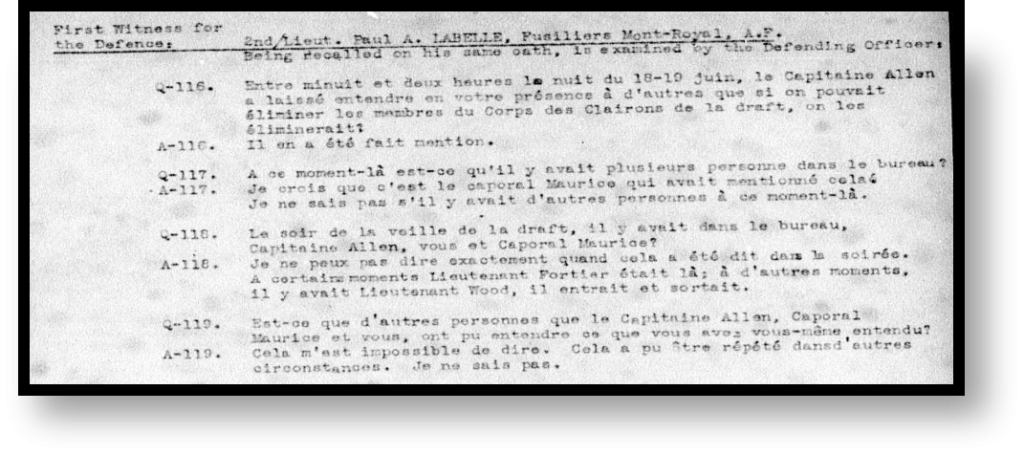
Serving in a predominantly English-speaking military posed a huge challenge for soldiers from Quebec. For most courts martial, English was the primary language. From the prosecutor’s questions and testimony to official documents, everything was in a language that many defendants struggled to speak. The consequences could be serious: misunderstood orders, hesitant responses, unintentional contradictory answers, tension with superiors, and even misinterpretations that caused conflict.
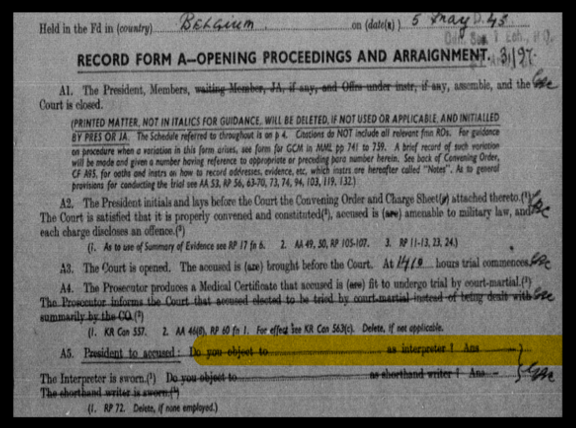
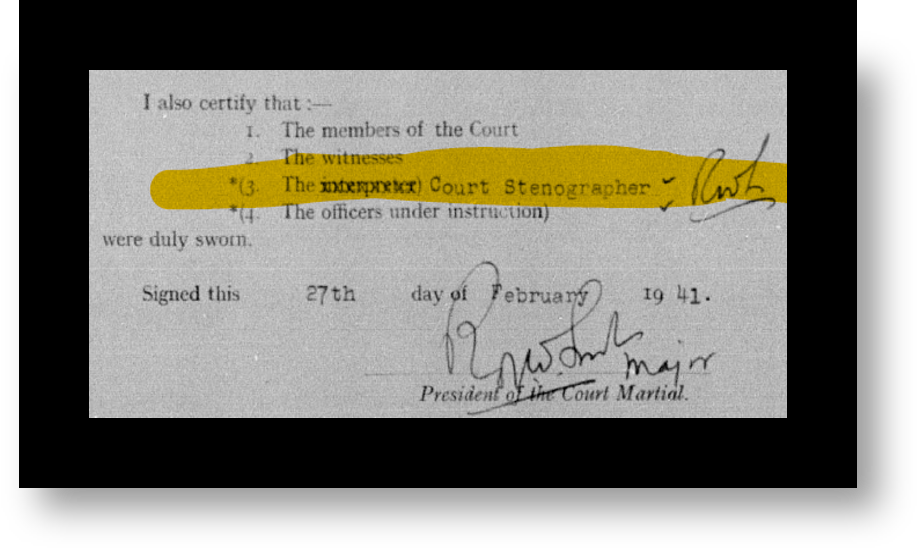
While interpreters were available at times, especially in England or Italy, having one was not guaranteed. Many trials saw Francophone soldiers attempt to explain themselves to an Anglophone jury in faltering English that was sometimes misunderstood. People who happened to speak both languages probably served as impromptu interpreters at these trials. However, since they are not mentioned in the records, we can only speculate that this was the case.
The courts martial documents remind us of a key reality that a soldier’s experience of war could change depending on their native tongue. The stress of language therefore added to the stress of combat.
Tensions, camaraderie, and regiment life
Military life is not just a series of rules and regulations: it is also made up of complex human relationships. The courts martial from the Second World War illustrate the conflicts along with the solid bonds that formed between soldiers. The archives show rivalries between volunteers and conscripts (called “zombies” at the time) along with alcohol-fuelled arguments, humiliation, insults among soldiers, and tensions between Francophones and Anglophones.
However, these men also forged a deep sense of brotherhood. For example, the documents show strong connections between soldiers, as shown by witnesses who downplayed the severity of the charges, officers who showed leniency for someone going through a hard time, unprompted mutual support in moments of chaos—and even collaboration in crime.
A justice system that highlights soldiers’ humanity
Courts martial were about much more than offences or a breach of regulations, as they also revealed the human under the uniform.
The men on trial were worried about their families, overwhelmed by stress, devastated by the loss of a comrade, or distraught at returning to the front lines so soon. Some cracked under the pressure. Others mentally shut down. Most tried to persevere through the charges.
These trials also showed how the military tried to balance discipline with compassion. Each case offers a glimpse into the life of a son, husband, father or young man that was turned upside down because of a war beyond his control.
These archives, which took a decade to digitize, are essential to understanding what it truly meant to serve during the Second World War. They remind us that military history is not just about great battles but is also a story of individuals with their personal strengths and weaknesses.
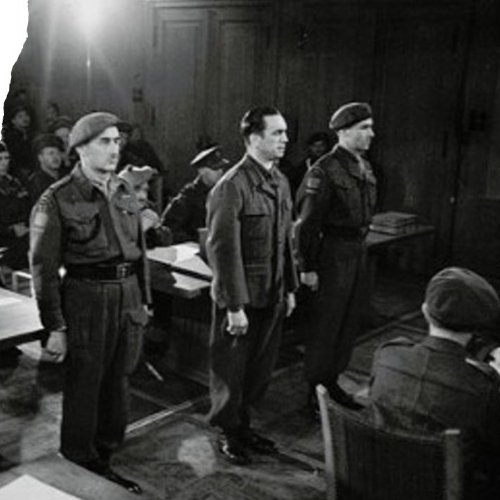
Cover Photo: Nazi war criminal Kurt Meyer is on trial by court-martial for his war crimes (source: Library and Archives Canada).
Article written by Christophe Bonin, Research Assistant at the Université du Québec à Trois-Rivières, for Je Me Souviens. Translation by Amy Butcher (www.traductionsamyb.ca).
For more information:
Are you interested in conducting your own research? Check out the original documents available Heritage Canadiana right here. Read also Christophe Bonin’s master’s thesis, in French: La justice militaire : un regard sur le quotidien des soldats pendant la seconde guerre mondiale. Finally, we recommend these essential books and articles on the subject:
- Chris Madsen, Another Kind of Justice: Canadian Military Law from Confederation to Somalia, Vancouver, UBC Press, 1999.
- Daniel Byers, Zombie Army: The Canadian Army and Conscription in the Second World War, Vancouver, UBC Press, 2017.
- Jean-Marc Berlière, Jonas Campion, Luigi Lacchè et Xavier Rousseaux (dir), Military Justices and World Wars (Europe 1914-1950), Louvain-la-Neuve, Presses universitaires de Louvain, 2013.
- Matthew Barrett, Scandalous Conduct: Canadian Officer Courts Martial, 1914–45, Vancouver, UBC Press, 2022.
- Patrick Bouvier, Déserteurs et insoumis : les Canadiens français et la justice militaire (1914-1918), Outremont, Éditions Athéna, 2003.
- Robert Engen, Strangers in Arms: Combat Motivation in the Canadian Army, 1943–1945, Montréal, McGill-Queen’s University Press, 2016.
- Teresa Iacobelli, Death or Deliverance: Canadian Courts Martial in the Great War, Vancouver, UBC Press, 2013.