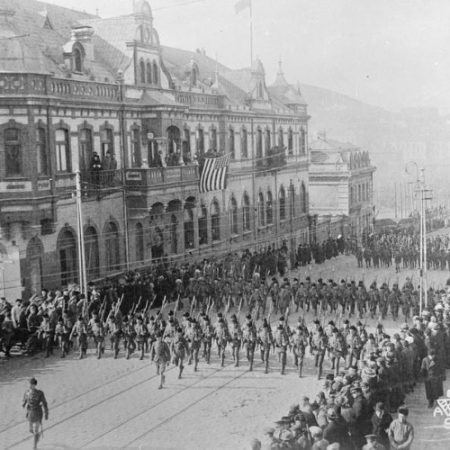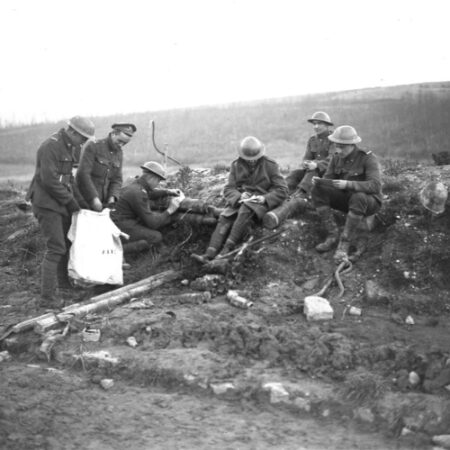
One of six regiments based in Montreal, the Régiment de Maisonneuve is also one of the oldest, with a rich history marked by its involvement in both World Wars, as well as its contribution to daily life in Montreal. However, for many years, the Maisonneuve faced a major problem: finding an arsenal for its troops.
At 691 Cathcart Street, in the heart of downtown Montreal, just a few steps from McGill Station, you’ll find the Régiment de Maisonneuve armoury. The regiment takes its name from one of Montreal’s two founders, Paul de Chomedey, Sieur de Maisonneuve. For the regiment, however, Maisonneuve’s legacy goes even further than its name. Indeed, in the early years of the colony, Maisonneuve was the leader of the small militia, protecting the first Montrealers from potential Haudenosaunee attacks. Over the centuries, European armies came and went, but the presence of the Canadian militia remained. In 1871, the British army left Canada, leaving the young country to form its own army. It was against this backdrop that the 85th Battalion of Infantry was founded on June 4, 1880.
However, when it was founded, no permanent facility was dedicated to the regiment. While today several Montreal units—such as the Royal Montreal Regiment and the Fusiliers Mont-Royal—have their own armory, this was not the case for the Régiment Maisonneuve for a long time. In fact, the history of the Maisonneuve is a story of two battles: on the battlefields of Europe, and in Montreal to secure its own space!
The early activities
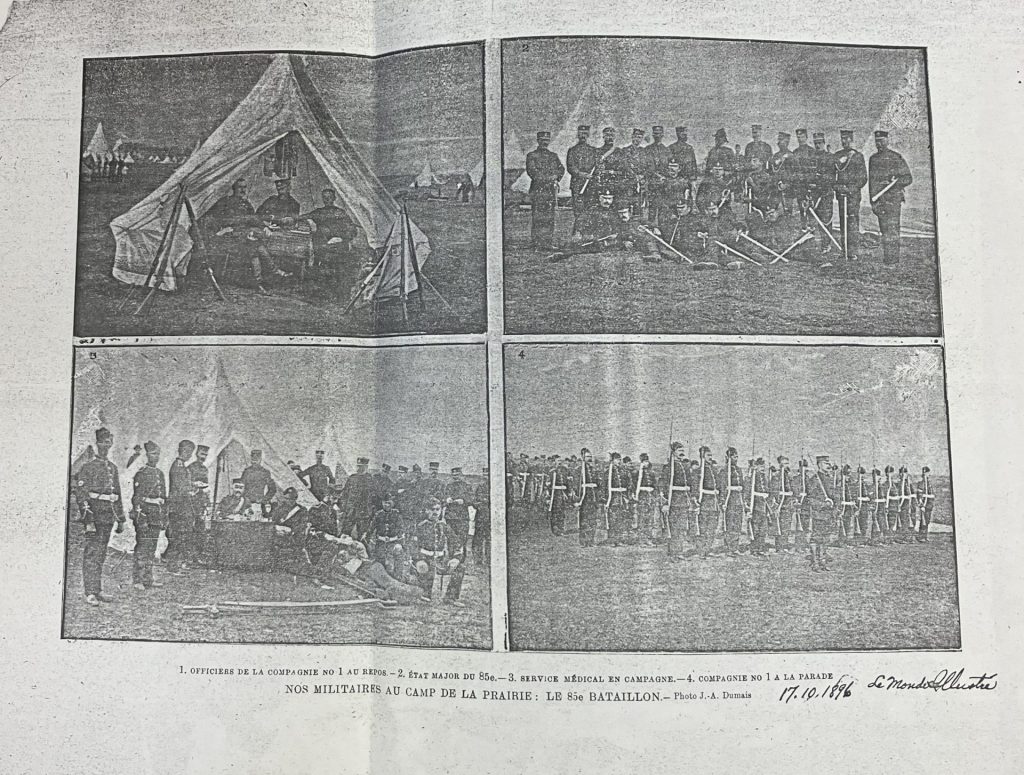
When it was founded, the battalion was a field unit, and mainly carried out military exercises outside of the city. In fact, at that time, summer camps were the main activities for militiamen. These camps were usually held in the areas around Montreal: in La Prairie, Saint-Jean-sur-Richelieu, Longueuil, or Trois-Rivières. Each session could thus bring together several infantry, cavalry, and artillery battalions, both French-speaking and English-speaking. There, the troops engaged in various training activities: endurance exercises, drill exercises, shooting sessions, weapon maintenance, and so on.
The camps were also places of celebration. On September 28, 1885, for example, the 85th received its official flags. For a military unit, the flag is an important part of its identity. It was therefore a great honor for them, as the president of the Literary Society of La Prairie, Mr. F. J. Bisaillon, put it:
“You were not called upon1, but you proved that the first part of your noble motto, “Bon Coeur,” [Good heart] was true. That was enough to convince us that, should the need arise, you would live up to the second part and prove that you also had “Bon Bras” [Good Arm].”
For the occasion, 5,000 people gathered in La Prairie for the ceremony. The event also featured a long march along the river, accompanied by music and even cannon fire!
During this period, the 85th’s reservists distinguished themselves among the province’s authorities, winning several awards in various exercises – which are still on display in their armoury. Until the First World War, the 85th greatly grew over the years, first achieving regimental status on May 8, 1900, then finally adopting its present name on March 29, 1920.
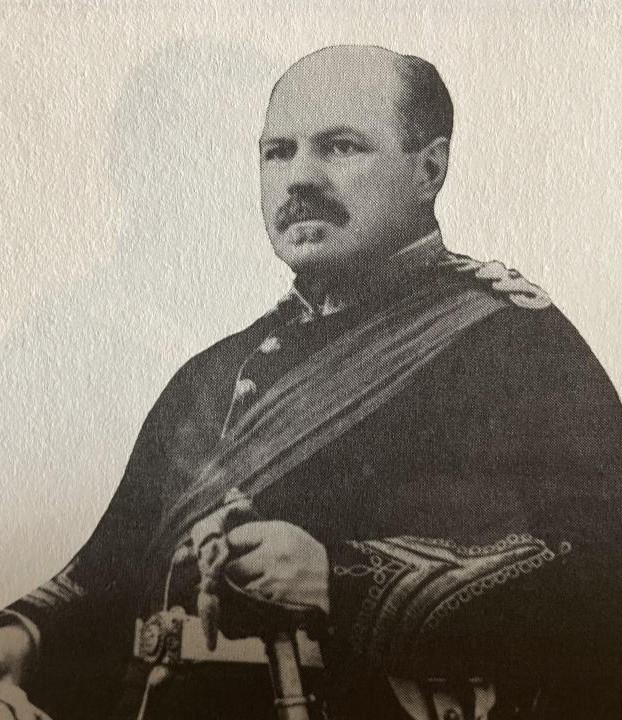
- This refers to the expeditionary force sent during Louis Riel’s second rebellion in 1885. At that time, it was the Fusilliers Mont-Royal who were called upon to join the force, rather than the Maisonneuve. The latter was assigned as a reserve unit but was ultimately never mobilized. ↩︎
The regiment through the world wars
The Great War was the regiment’s first test of strength. As a militia regiment, its main task was to stay at home and protect the country in the event of an enemy invasion – an unlikely thing in the circumstances. In fact, the regiment made its mark primarily by sending volunteers to Europe. When war broke out, the 85th’s officers launched a major recruitment campaign. Within days, 250 new soldiers and officers were mobilized and sent to Europe, where they were incorporated into the 22nd Battalion; the future Royal 22nd Regiment. The soldiers of the 85th fought mainly in France, where they suffered many casualties in the trenches. By 1918, the Régiment de Maisonneuve saw 102 deaths and 198 wounded among the 524 soldiers who fought in France throughout the war.

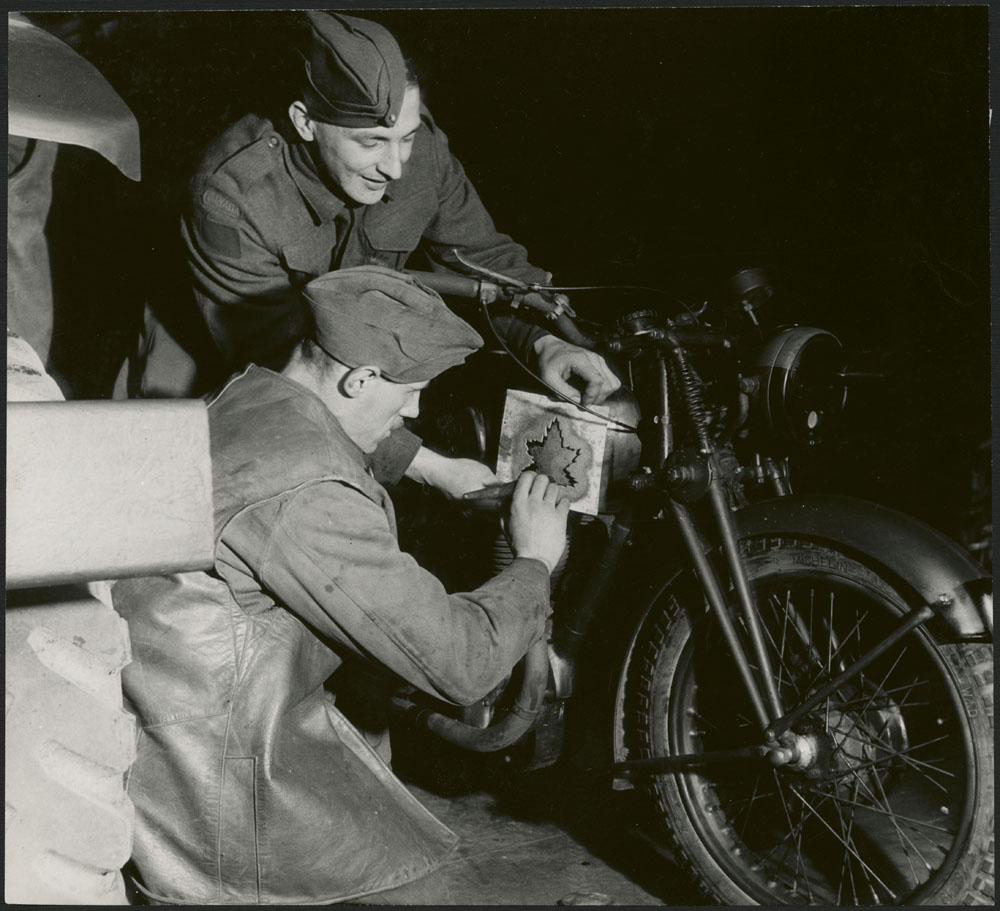
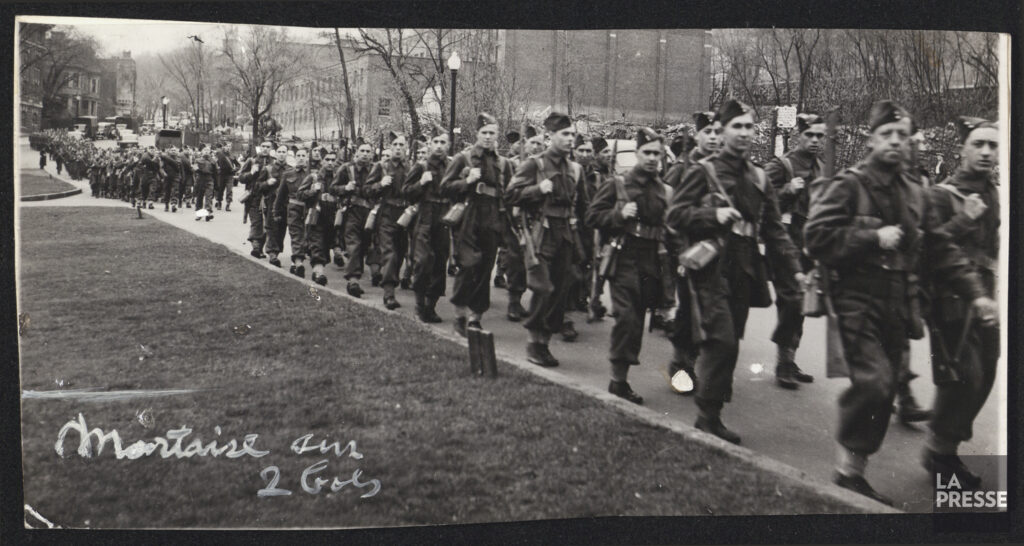
It was during the Second World War that the regiment saw the most action. Unlike during the Great War, the regiment’s volunteers did not have to be transferred among other units in order to be sent to Europe. Indeed, on September 1, 1939, the Régiment de Maisonneuve mobilized its first battalion of volunteers, who arrived in Europe the following year. At the same time, it also founded a second battalion, which remained in reserve in Canada. However, at this point in the war, the vast majority of Canadian troops were garrisoned in Great Britain, where they had to carry out various exercises and duties… all the while fighting boredom.
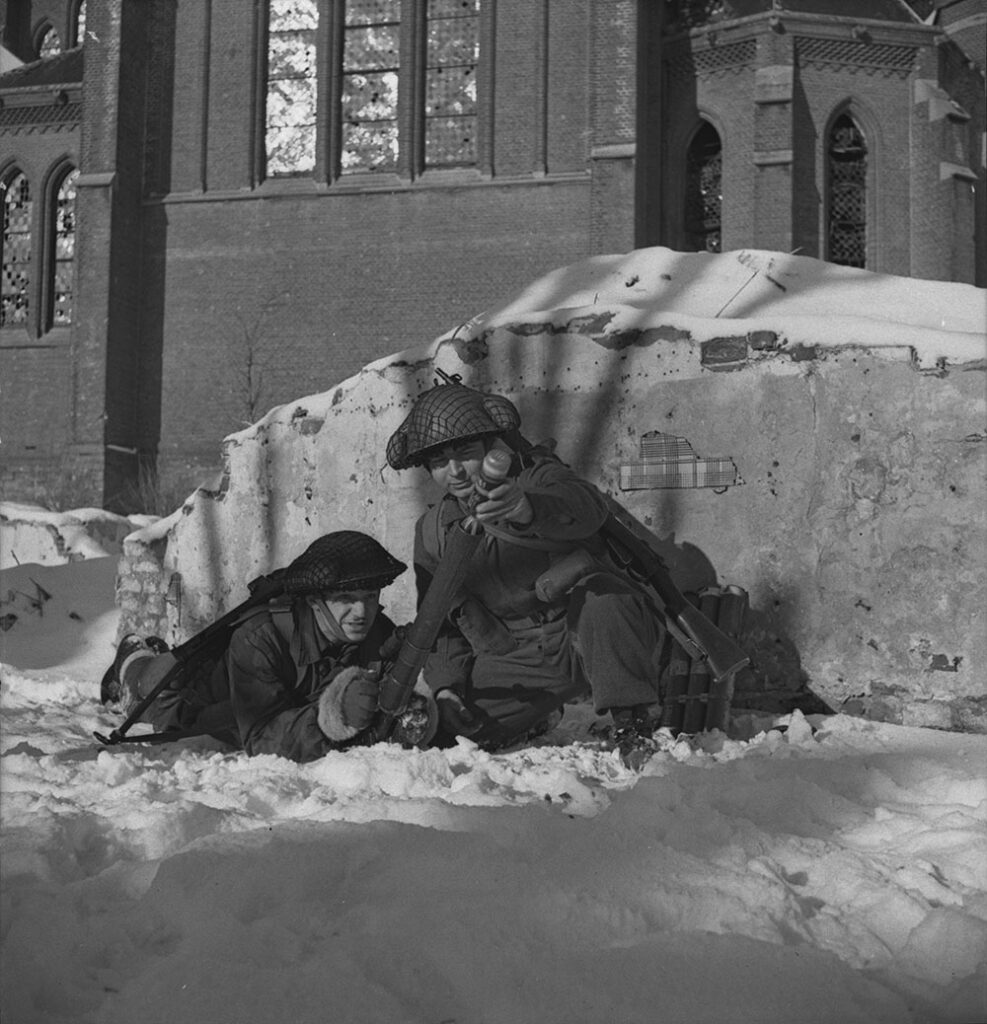
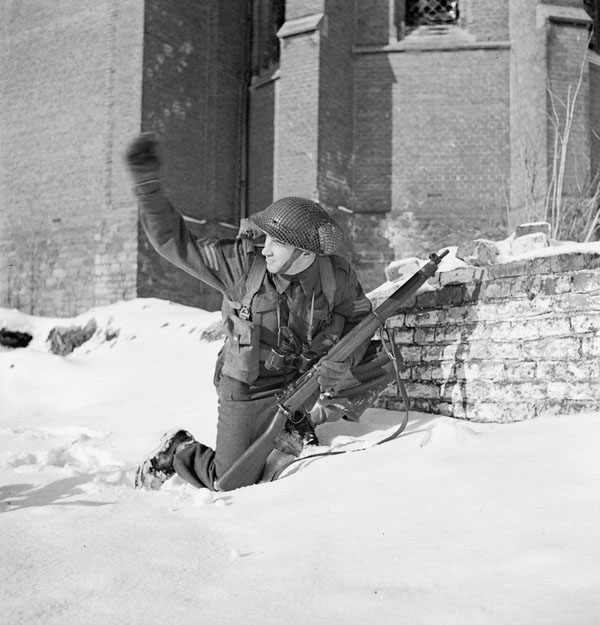
It was not until 1944 that the Maisonneuve was mobilized on the mainland. On July 6, 1944, the men of the Maisonneuve indeed landed in Normandy and helped American troops liberate northeastern France, Belgium and the Netherlands until the end of the war.
Nevertheless, the Maisonneuve’s successes during the war did not solve a larger problem back home: its lack of an arsenal. By the end of the two world wars, all Montreal units had successfully built their own armories to conduct their activities: the Black Watch in 1906, the Fusiliers Mont-Royal in 1911, the Canadian Grenadier Guards in 1914, the Royal Montreal Regiment in 1920, and the Victoria Rifles of Canada in 1934. As a result, the Maisonneuve was among the last units still operating without a permanent home.
In search of an arsenal
At its foundation, the headquarters of the unit was officially in Montreal. Indeed, at the time, the headquarters was where the officers would hold meetings to manage the regiment’s affairs; no soldiers were supposed to go there to train. Over the years, meeting locations became increasingly varied: in city hall offices, in the homes of senior officers, or anywhere else that was suitable!
Things were a bit more complicated for the soldiers. The upper floors of the Marché Bonsecours, in Old Montreal, initially served as a warehouse for the regiment’s uniforms, equipment, and weapons. The militiamen therefore had to go there to get their gear before conducting their drills at the adjacent Champ de Mars.
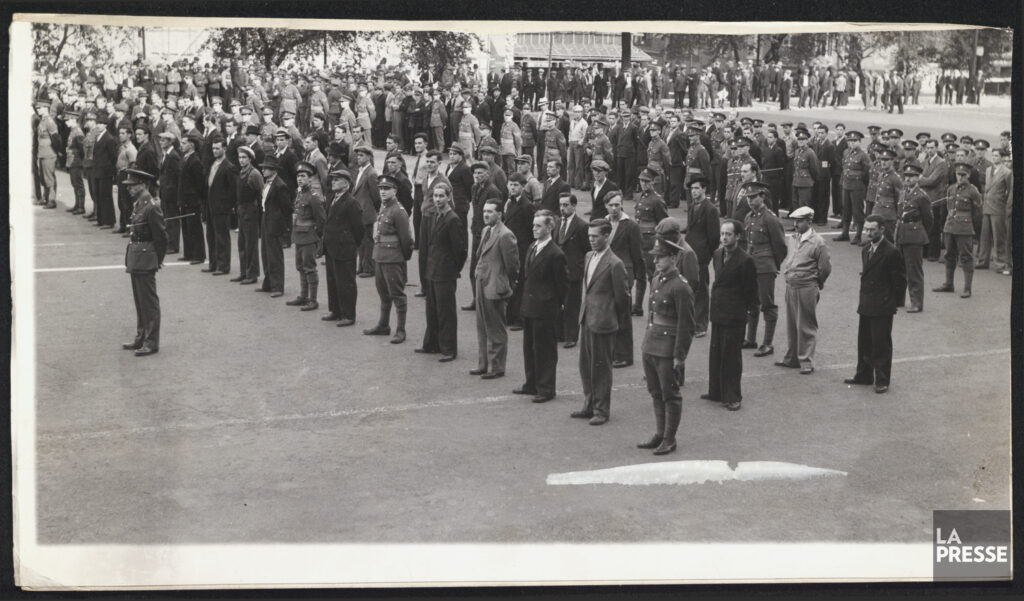
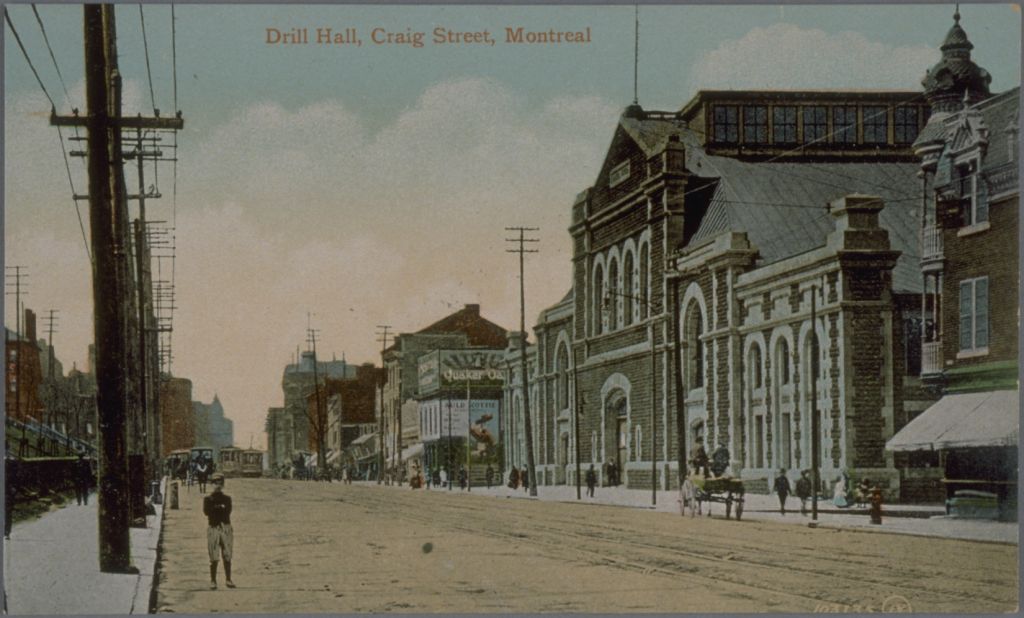
Things gradually changed throughout the years. In 1888, due to a lack of space, several militia units were invited to use the Armoury Arsenal training room at 175 Craig Street East in Montreal and nicknamed the “drill hall”. Over the next few decades, the regiment thus used the training hall and various other temporary locations for its activities outside of Montreal. However, the building was dilapidated, and, as mentioned earlier, several units decided to build their own riding arena. The Maisonneuve was thus soon the only one using the building, which was now too old to accommodate them properly.
The Drill Hall
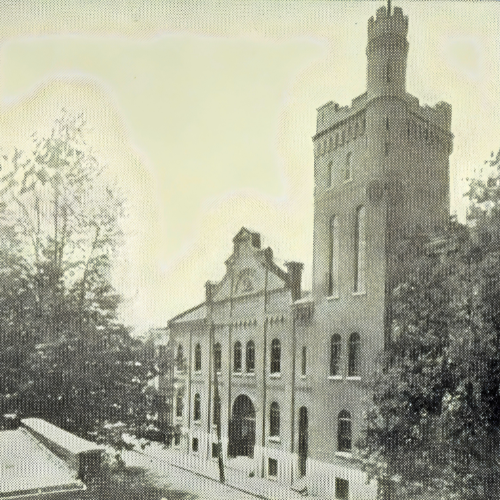
Built at the end of the 19th century, at the same time as several military units were being established in Montreal, the Drill Hall was a large building designed for troop training. However, the significant expansion of the Canadian military during the 20th century quickly rendered the building obsolete. The building’s façade was eventually renovated in 1938, but the issue of space remained a major concern.
The hall housed the Régiment de Maisonneuve until their move. The Maisonneuves were then the last permanent residents of the Hall. Subsequently, the armoury became a detention center, before being demolished in 1969 for the construction of the Waterloo prison.
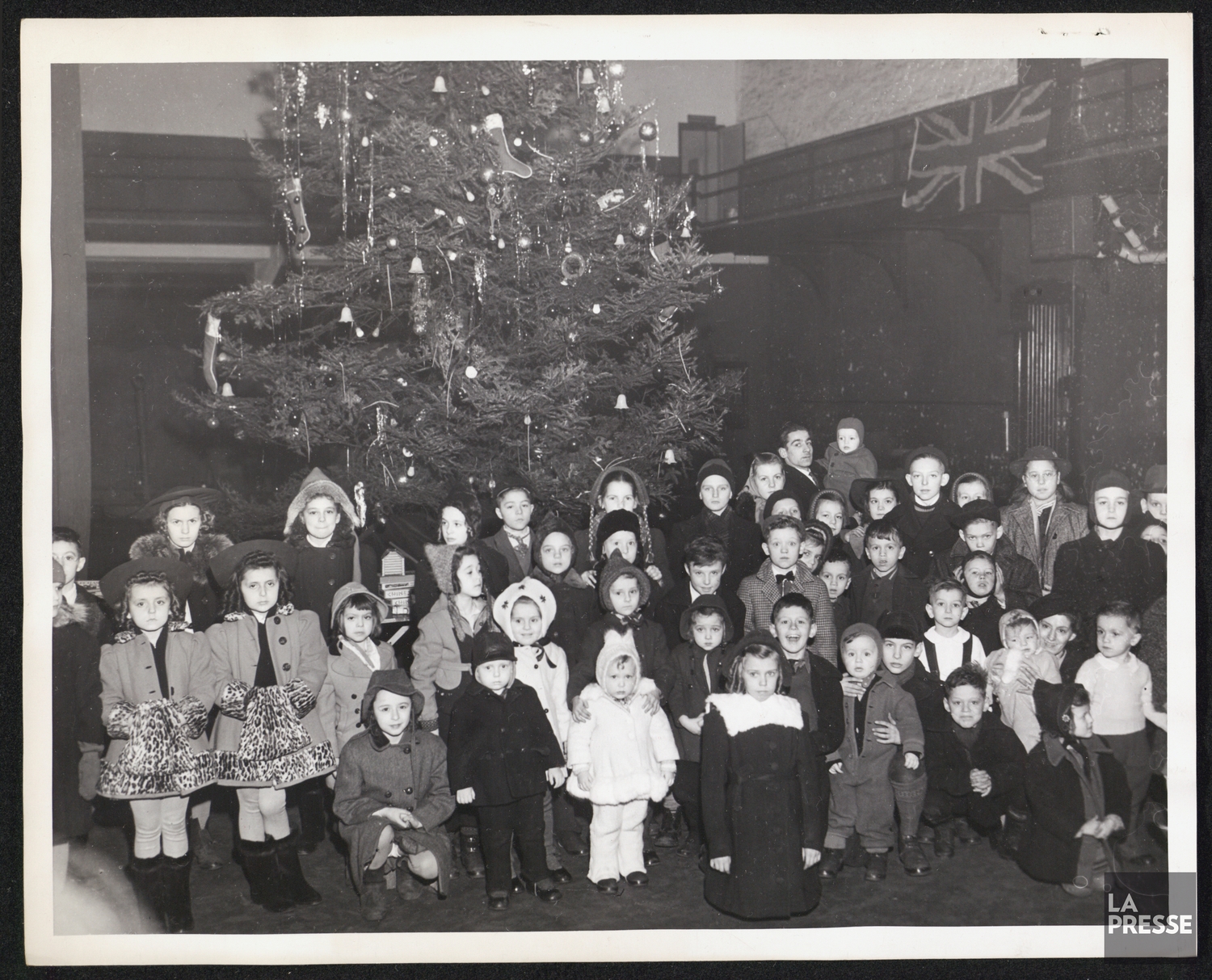
The question of a permanent location remained, however, a major preoccupation for several officers. At a meeting held on September 21, 1927, the question was raised to acquire an armoury to center the regiment’s activities. It would seem that having to still use the training hall on Craig Street was the subject of many complaints among the members, as Lieutenant-Colonel N.-A. Millette wrote in May 1928: “…we are not yet on an equal footing with the other Montreal units and, naturally, this is a subject of sometimes bitter complaints…”.
Finding a place to house several hundred soldiers, officers and musicians remained a complicated task. In 1929, the city of Outremont offered the regiment a plot of land at the corner of Rockland and North streets, but nothing was built on it due to nebulous organizational problems. Five years later, in 1934, plans were made to build an arsenal for the regiment on Chapleau and Rachel streets. However, a citizens’ demonstration organized by the local church put the brakes on the project. The final attempt came in 1937, when the federal government granted a $100,000 budget for the construction of a new armoury, which was to include a gym, shooting gallery, classrooms, bowling lanes, swimming pool and separate quarters for officers and non-commissioned officers. This project also failed, however, when the next federal budget eliminated the planned grant.
The outbreak of war in Europe, in September 1939, at least increased the regiment’s recruitment, which was now at full capacity. In October 1939, it was decided to move to a warehouse on Ontario Street, owned by the Baillargeon company, previously renovated as an arsenal and which seemed adequate to welcome the new recruits. The Drill Hall, however, remained the regiment’s principal residence until the move to the Cathcart Armoury… more than thirty years later.
The Cathcart Armoury
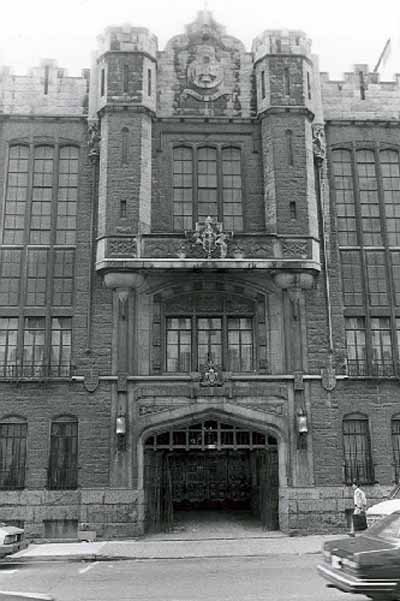
As mentioned above, while the Maisonneuve were still looking to build their armoury, the Victoria Rifles managed to successfully build theirs in 1934. Designed by Montreal architect David Jerome Spencer, the armoury’s exterior façade was built in a Tudor style consciously reminiscent of a medieval castle. Completely at odds with the surrounding buildings, the armoury features three turrets, a balcony and a portcullis door.
Unlike many other armouries on the island of Montreal, the Cathcart armoury was built high up to fit in with the urban layout of the downtown area. The building’s first floor contains offices for employees and a rest room for soldiers, while the second floor is mainly reserved for officers’ messes and reception rooms. Finally, on the upper floor we find the main gym.
The Victoria Rifles occupied the arena until their disbandment in 1965. At that time, the Canadian Army was reorganizing its regiments, and it was decided to disband them in favor of the Régiment de Maisonneuve. They finally got their armoury, but only on condition that the Victoria Rifles’ history continue through them. For the Maisonneuve, their search ended, but at the cost of seeing their colleagues disappear.
The regiment today
The regiment is a unit very proud of its history, and its members today still retain the same spirit as their colleagues of the century prior. To this end, the regiment continues to organize various activities and training for its recruits, as well as maintaining many social activities for those around them. Since the Second World War, many of the regiment’s members have been engaged in other operations, such as in Afghanistan and elsewhere in the province. The Maisonneuve remains active, and its tradition is maintained.
Naturally, the armoury is also still active, and regularly hosts regimental activities. Visitors will, however, be impressed by the quantity of objects of all kinds that decorate every metre of the building. The regiment’s long history rubs shoulders with the officers, soldiers and recruits who still work in the offices every day. Those in charge of the armoury are currently busily inventorying and documenting the objects they hold, as well as adding new acquisitions to their collection. For those in charge, reserving a few pieces for a regimental museum is not in the plans. “The museum is all around us,” said Jacques Coiteux, the man in charge of the Regimental Museum, when describing the armoury during our visit. To this end, the Regiment is faced with a titanic task in documenting their imposing collection, but the results are there, with a magnificent building rich in history.
Cover Photo: The facade of the Cathcart riding arena at the time of its construction (source: BAnQ).
Article written by Julien Lehoux for Je Me Souviens.
Sources:
- “Le Régiment de Maisonneuve“, Gouvernement du Canada/Government of Canada.
- “Le Régiment de Maissonneuve : Histoire“, Le Régiment de Maisonneuve (in french).
- “Cathcart Armoury“, Parcs Canada/Parks Canada.
- “The Undead“, World War Graphic History.
For more content:
- Finally, we recommend Bon Cœur et Bon Bras: Histoire du Régiment de Maisonneuve, 1880-1980 (in french) for a complete history of the regiment.
- A collection of almost 100 photos showing the activities of the Régiment de Maisonneuve in Montreal during the Second World War is available on the BAnQ website here.
On March 12, 2024, Julien, our Program Manager, was at the Société Historique de Montréal to record a new episode of their program Notre Histoire en tête, hosted by historian Mathieu Trépanier. Broadcast on Radio VM every Tuesday morning at 9 a.m., the show is also available on the Society’s YouTube and Soundcloud channels! For the occasion, Julien presented a brief history of the various Montreal regiments that call the city home. From their military involvement over the centuries to the establishment of their armouries, these regiments hold a strong heritage that has left its mark on Montreal’s identity! Listen to his episode here.
Finally, many of the published photos come from the archives of the La Prairie-de-la-Magdeleine Historical Society. On August 12, 2025, Julien was invited to consult these archives in preparation for a presentation on the history of the 85th Battalion for the Society. Check out their website for more information on their activities!