
On May 17, 2006, during the Battle of Bayanzi in Afghanistan, Captain Nichola Goddard became the first Canadian woman to direct artillery fire in a combat situation, precisely coordinating howitzers and helicopters under intense fire. Her extraordinary journey, from her childhood in Papua New Guinea to her final mission, illustrates a deep commitment and exemplary leadership, now immortalized in Canadian military history.
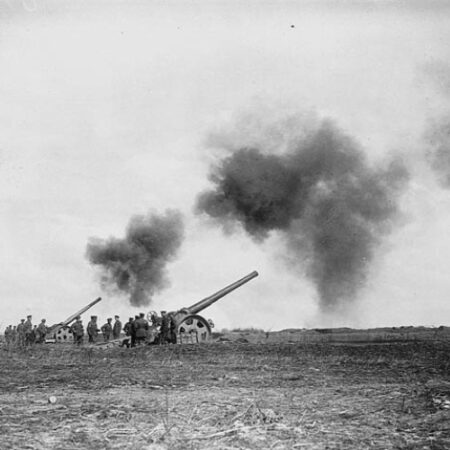
On May 17, 2006, Canadian and Afghan National Army (ANA) forces were engaged in a firefight in the Panjwaye District. The Battle of Bayanzi resulted from their mission to secure part of southern Kandahar against a possible Taliban assault. As the units moved in to capture fifteen men hiding in a mosque, they came under intense fire from militants in the surrounding houses. Accompanying C Company, 1st Battalion, Princess Patricia’s Canadian Light Infantry (PPCLI) that day was a Forward Observation Officer (FOO) from A Battery, 1st Regiment Royal Canadian Horse Artillery (1RCHA). This officer’s job was to coordinate the fire from the regiment’s M-777 155mm howitzers and circling American Apache helicopters. The FOO was Captain Nichola Goddard, and she was going to make history that day.
A history of women in Canada’s military
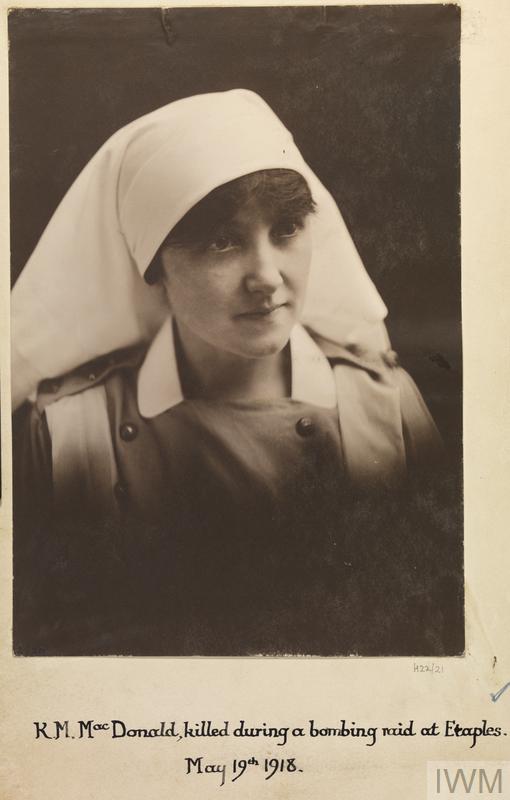
In Canada’s military, there have been a number of firsts for women. The Northwest Rebellion saw women working as nurses in military hospitals. The Boer War saw the first deployment of women nurses to an active theatre of war. The Great War, or as it would later be known, World War One, saw thousands of Canadian women answer the call to become Nursing Sisters. Nursing Sister Lieutenant Katherine Maud Mary MacDonald from Brantford, Ontario, enlisted in the Canadian Expeditionary Force (CEF) on March 20, 1917. She served overseas and was killed during a German air raid on her hospital. She was the first Canadian service member to die from direct enemy action.
The Second World War saw 4480 women acting as nurses but, because it was a “Total War”, women were also allowed to directly join the armed forces. Over 46,100 women entered the Canada Women’s Army Corps (CWACS), or the Women’s Division, Royal Canadian Air Force (WDs) or Women’s Royal Canadian Naval Service (WRENS). These women performed a wide variety of jobs from vehicle maintenance, signals, cryptography, cooking, laundry and drivers. When the Canadian Human Rights Tribunal reached its determination in 1989, women were allowed to take on combat roles. Heather Erxleben became the first woman to serve in a regular infantry unit. By 1991 Lieutenants Brown, Reiffenstein, and Captain Shrum, as artillery officers, became the first to serve in a combat arm.

Captain Goddard had an unusual path to the village of Bayanzi. She was born in Papua New Guinea to teachers working at an overseas school. Her parents did not return to Canada until she was three, by which point she knew the local language and had lived the life of a New Guinea villager. In 1984 her parents returned to Canada and settled in a fly-in Dene community in northern Saskatchewan. Again, she adapted as children do, picking up the local language from her new friends. This was just one of the many places she would live in Canada. In 1997, her senior year in high school, she applied for the Royal Military College (RMC). She was attracted by a desire to serve, a free education and a guaranteed job. In 2001 she would graduate as an artillery officer.
Posted to storied 1RCHA, Goddard served a variety of roles as she gained experience and rank. On September 11, 2001, 19 men took over four United States domestic flights and staged the largest terrorist attack on American soil. Through our commitments to the United Nations and NATO, Canadian military personnel would begin deploying to Southwest Asia in October 2001.By January of 2002, Canadian soldiers began to arrive in Kandahar, joining American and British troops in an effort to remove the Taliban from power and to put a stop to Al-Qaeda, the terrorist organization responsible for the 9/11 attacks and who were sheltered by the Taliban. The long-term objective was to bring peace and stability to the region. Goddard would arrive in January of 2006, as the FOO attached to 1PPCLI. It was her first active overseas deployment.
Read the rest of the article on Honouring Bravery
Article written by Kris Tozer for Honouring Bravery.