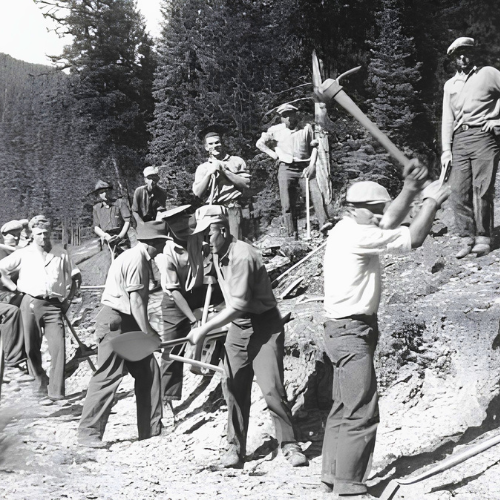
Did you know that there were more than 10,000 conscientious objectors in Canada during World War I? Thousands of people enlisted in the Canadian Army as soon as the war began. However, that wasn’t the case for everyone! Learn more about the history of Canadian conscientious objectors!
Conscientious objectors are people who refuse to serve in the military. They may do so for personal, political, or religious reasons. In Canada during World War I, more than 80% of conscientious objectors did so for religious reasons. Canadian Mennonites, for example, constitute one of the largest communities among conscientious objectors. In Ontario and Western Canada, Mennonite, Quaker and Seventh-Day Adventist communities asked the federal government for exemptions from service for their members.
Others opposed the war for political reasons: out of pacifist conviction, or in opposition to what they perceived to be an imperialist war. Thus, the situation could have escalated because of the range in between political opinions! During conscription, notably, many people were forced to enlist in the army. Tensions were high, and in Quebec, this naturally led to the conscription crisis of 1917.
To avoid a national crisis, the Canadian Army therefore gave conscientious objectors the option of working in one of its auxiliary services: in construction, industry, or medical services. This allowed thousands of people to join the army without, however, taking part in combat. Nevertheless, in many areas, the work was physically very demanding, and it is likely that many people would have preferred to do something else! But at least, for them, war was avoided.
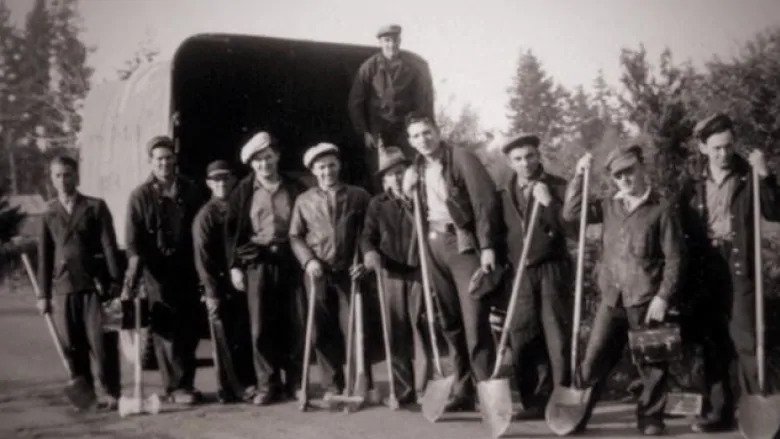
Cover photo: Conscientious objectors continued to work in camps until World War II! This photo shows a group of Mennonites working on a road in Jasper National Park, Alberta (source: Mennonite Brethren Historical Commission).
A video edited and narrated by Aglaé Pinsonnault, and researched and written by Julien Lehoux for Je Me Souviens.