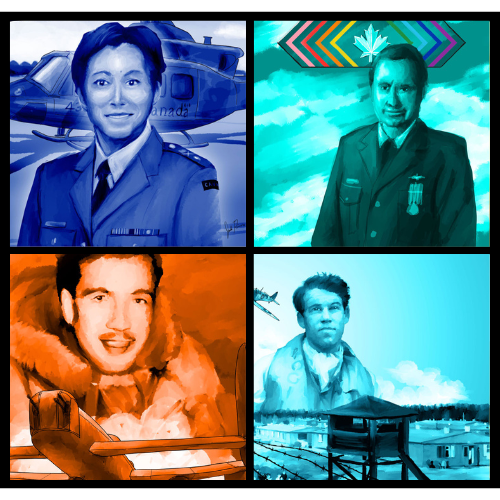
In 2025, the ARC Foundation published their latest children book: Aviation Nation: How Canadians Contributed to Flight and Space Around the World. Discover an exclusive excerpt from this new book!
Members of the Royal Canadian Air Force (RCAF) have greatly contributed to the aviation field both in Canada and around the world. In collaboration with the RCAF Foundation, Honouring Bravery and Je me souviens would like to share some of these stories with you. If you are interested in reading more stories like this, check out the RCAF Foundation’s latest book: Aviation Nation.
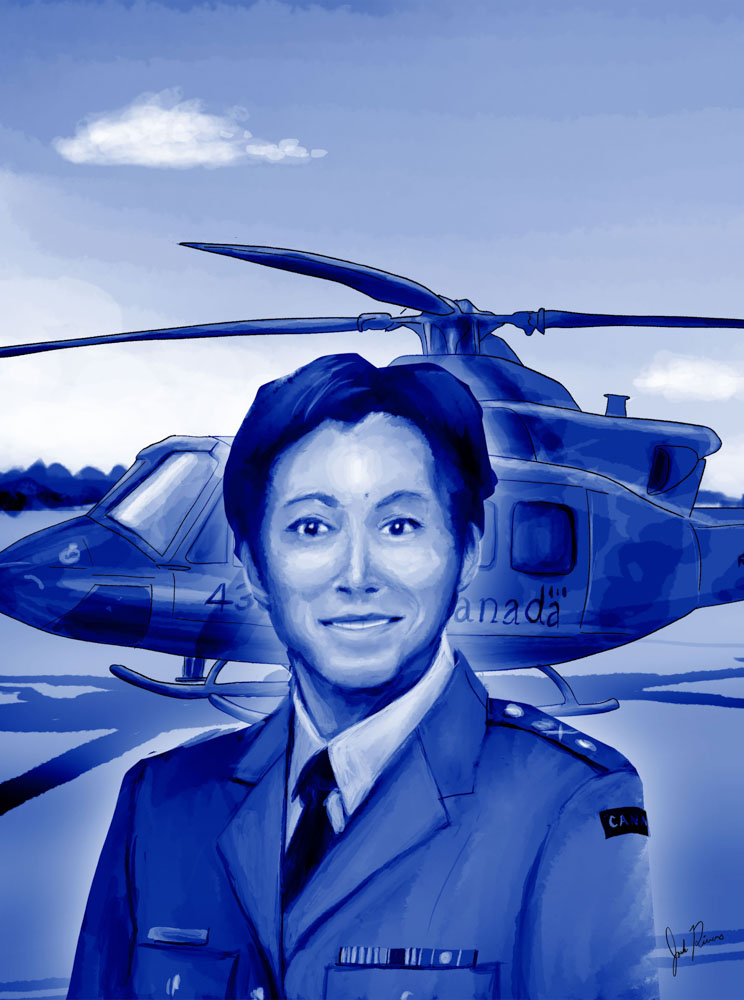
Nancy Tremblay
OPENING DOORS FOR WOMEN IN STEM
When Nancy Tremblay was fifteen, she had a big dream. She wanted
to join the military and learn about science and technology. So
when she was old enough, Nancy joined the Canadian Armed Forces
(CAF). She went to military college and studied math and physics.
Nancy did so well that she became Cadet Wing Commander in her
last year. After college, Nancy spent a year studying to become
an aerospace engineer, and learned all about making aircraft,
spacecraft, and satellites fly.
During her thirty-five years in the RCAF, Nancy was the first woman to reach the rank of colonel and eventually to be promoted to Major-
General in Aerospace Engineering. Throughout her career, Nancy has
believed that technicians are the real heroes in the RCAF because
they work so hard to keep the planes reliable and ready to fly.
Nancy didn’t just follow her dreams; she opened doors for other
women who wanted to work in STEM-related fields in the military.
Her story shows us that with enough determination, anyone can
achieve their dreams—and become a leader in the RCAF!
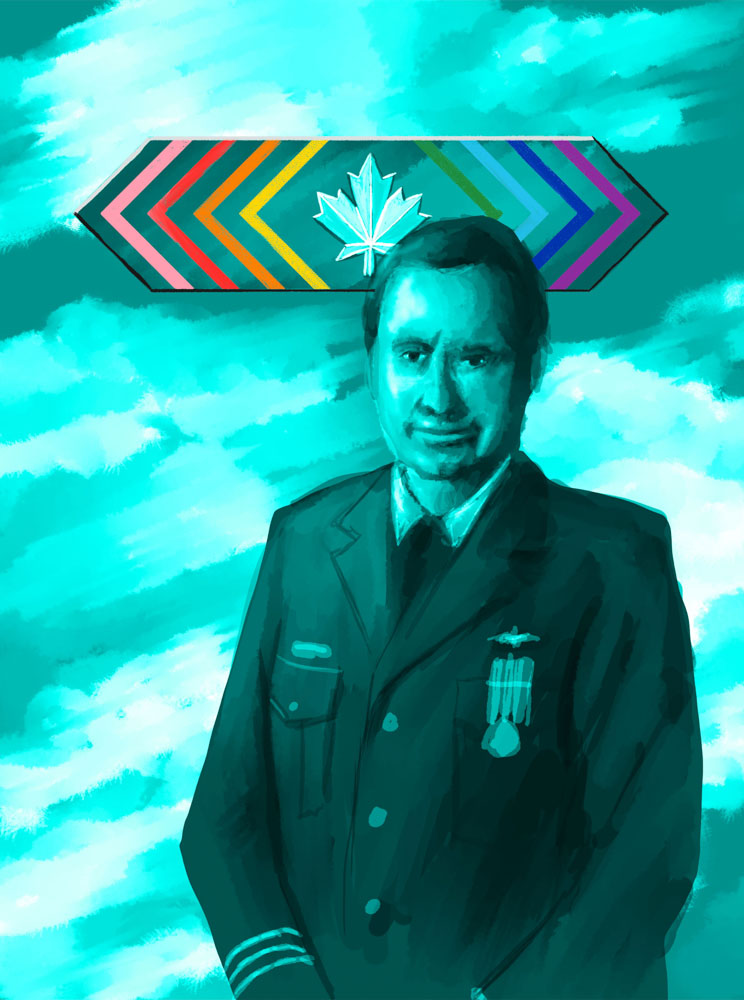
Steven Deschamps
SERVING HIS COUNTRY WITH PRIDE
Back in 2020, the Government of Canada wanted to make things
right for LGBTQ2+ Canadians who had faced unfair treatment while
serving in the military. They apologized for the wrongdoing and
honoured the members treated unfairly with the presentation of
both an insignia and a badge called a Pride Citation.
Today, the Canadian Armed Forces recognizes that it should
reflect the diverse population it serves, that everyone deserves to
be treated with respect no matter who they are, and that when
everyone feels included and respected, they work better to achieve
their missions.
In 2020, Steven Deschamps received his Pride Citation, and was
distinguished again in 2022, when he was made an Honorary
Colonel for 443 Squadron in Victoria, British Columbia. Steven
proudly wears the citation on his RCAF uniform.
Keith Skeets Ogilvie
THE GREAT ESCAPE
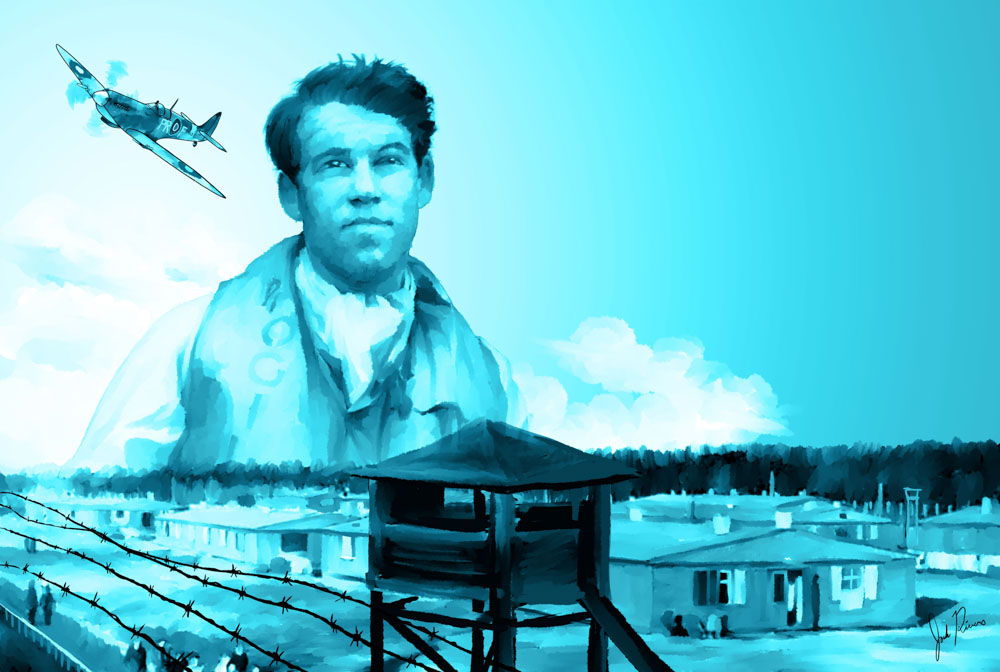
Keith “Skeets” Ogilvie is one of Canada’s most celebrated fighter pilots. In 1939, Skeets joined 609 Squadron in Britain’s Fighter Command. Keith was one of the one hundred Canadian pilots who fought in the Battle of Britain. Flying a Spitfire, he survived with six victories only to be shot down and taken as prisoner of war (POW) by the Germans.
Imprisoned in the infamous POW camp, Stalag Luft III, Ogilvie’s story became the stuff of legends, inspiring the television show Hogan’s Heroes, along with the 1963 film, The Great Escape. The reason is because while he was imprisoned, Skeets helped mastermind the daring escape of over 200 POWs. For months, prisoners dug three tunnels called “Tom,” “Dick,” and “Harry.” In 1944, 76 men escaped out of “Harry,” including Ogilvie. Unfortunately, all 76 were recaptured. Ogilvie remained in captivity until he was freed in 1945.
Elevated to the rank of Flight Lieutenant during his captivity, Ogilvie returned to Canada and joined the RCAF. He served as squadron leader at several stations before retiring in 1962, leaving behind a legacy of perseverance and bravery immortalized in a movie!
Williard John Bolduc
ONE OF CANADA’S FIRST INDIGENOUS OFFICERS
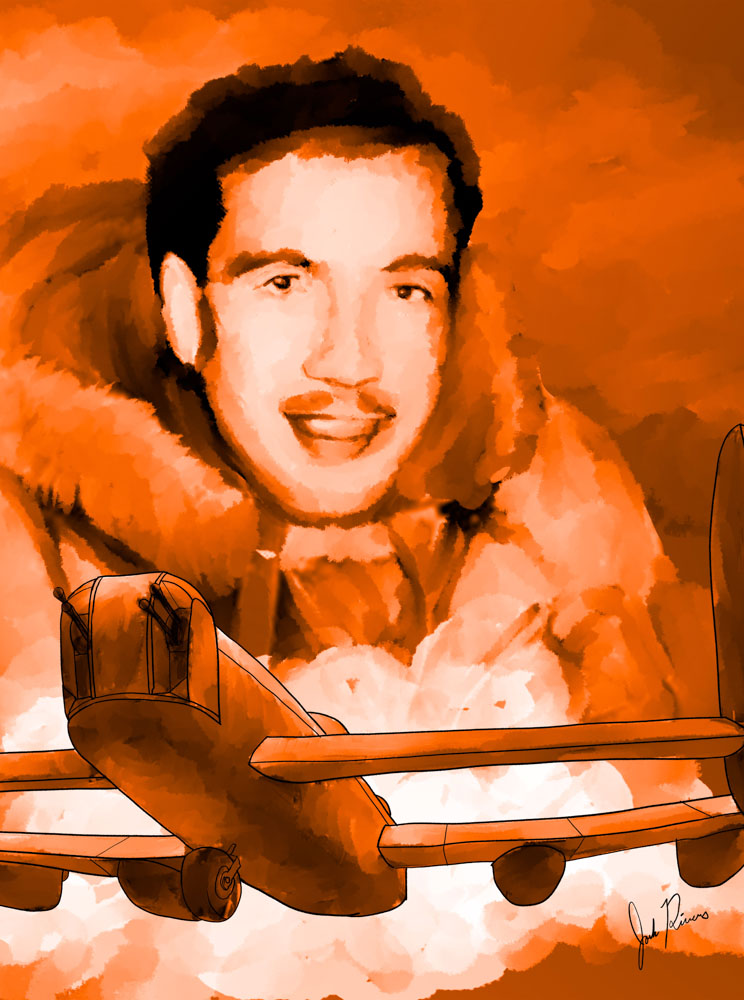
Willard John Bolduc’s mother was Ojibway and his father was Cree. Inspired by his father, who fought in the First World War, Willard joined the RCAF in 1941. He was assigned general duties before being sent to Nova Scotia as part of a Bomber Reconnaissance squadron. His job was to spot and defend the East Coast against enemy submarines. Willard did so well that he was reassigned from general duties to aircrew.
Willard had his sights set on becoming an airplane gunner. After his training was complete, he joined a special group in England called Bomber Command. During the Second World War, Willard flew as rear gunner in a Lancaster bomber on missions over Europe. This was an incredibly dangerous job. The rear gunner’s spot was in a little glass dome at the back of a plane. (If you’ve seen Star Wars, they look a bit like the gun bays on the Millennium Falcon, with a lot less room to move!)
Willard saved his plane from enemy attack and was given the Distinguished Flying Cross (DFC) medal. He was even promoted to Flying Officer—when Indigenous peoples typically weren’t given this rank—proving that with enough courage and skill, you can aim to be a hero.
Images courtesy of RCAF Foundation Illustrator Josh River. Excerpts of Aviation Nation, by Michael Hood and Tom Jenkins, reprinted with the permission of the RCAF Foundation.
To learn more:
For more information on the RCAF Foundation’s classroom resources for Aviation Nation, click here.
Would you like to discover other profiles? This article was published in collaboration with Honouring Bravery, which presented its own selection: pilot Allan Bundy, astronauts Jeremy Hansen and Jameel Janjua, and technician Tammy Negraeff. Discover them via this link!