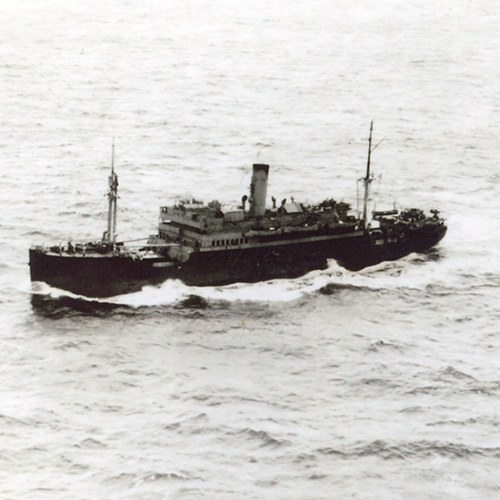
Most of us have never heard of the SS Nerissa. She is an obscure ship named after an equally obscure character from the Merchant of Venice. A small passenger and cargo steamer with a re-enforced hull purpose built to deal with possible ice. Commissioned by the Red Cross Line in 1926, she was intended to plying between New York City and St. John’s, Newfoundland. A change in ownership, the Great Depression and other factors would lead her to be later shifted to a Bermuda to New York run with Furness Withy Group.
In April 1940, with the growing Total War, the SS Nerissa like many other ships in the Commonwealth was pressed into war service. She was designated an auxiliary transport. She would undergo a refit to arm her and alter her berths to allow her to carry 250 men.
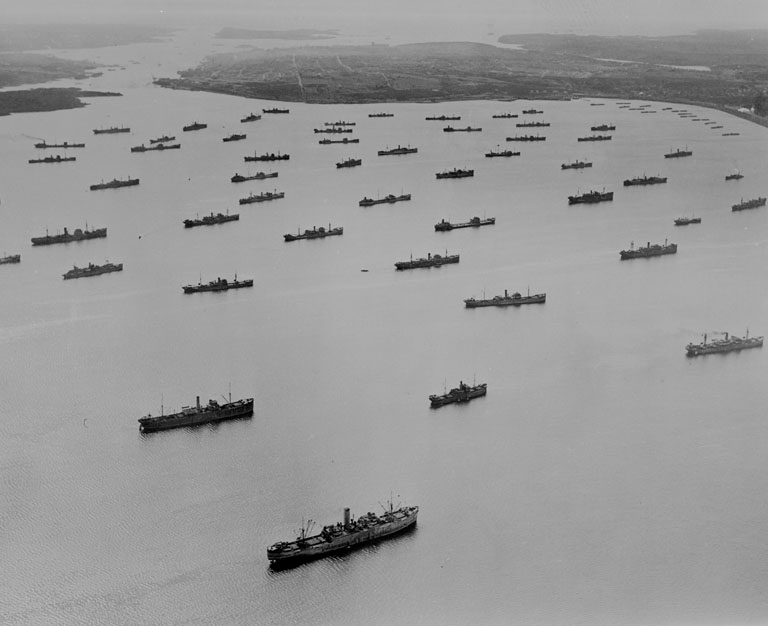
With the return of German Unrestricted Submarine Warfare, the allies had quickly resurrected the convoy system used in the Great War. Destroyers and corvettes would escort gaggles of merchantmen across the North Atlantic. These convoys would form up in places like Bedford Basin, Nova Scotia, where they would be divided into groups based on their cruising speeds. Slow convoys were capable of sustaining speeds up to seven knots, whereas fast convoys travelled at between nine and thirteen knots. The Nerissa was capable of reaching a top speed of 17 knots, well above the speeds of the fast convoys. Because of this potential, it was believed she would be able to outrun the U-Boats threat. This belief held true, she would make 39 crossings during the war. This earned her a reputation as a ‘lucky ship’.
On April 21, 1941 she began a crossing from Halifax to Londonderry carrying 291 souls and 3050 tonnes of cargo. These passengers and crew were a mix of Royal Canadian Navy, Canadian Army, Royal Air Force, Merchant Navy members, medical personnel and other specialists. In addition, a small contingent of twenty civilians were on board, including Joseph and Elizabeth Lomas and their three small children, Terence, Joan and Margaret. The Nerissa would initially leave Halifax with Convoy HX 122. After a few hours she pulled away from the group and sailed on independently as her high speed allowed. She was about to pass through some of the most heavily hunted areas of the North Atlantic.
Read the rest of the article on Honouring Bravery
Article written by Kris Tozer for Honouring Bravery.