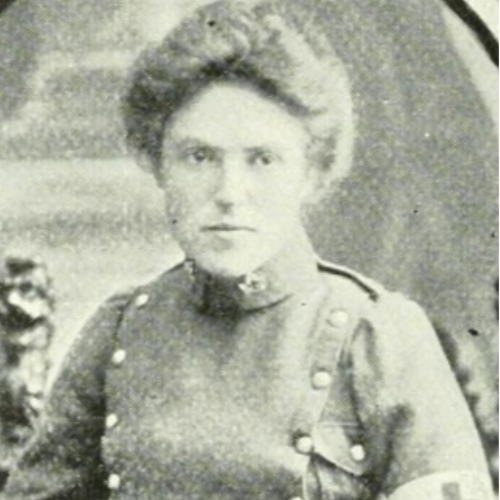
At the turn of the 20th century, women had few opportunities to serve in Canada’s military. Some of the first women to be allowed to serve were the nursing sisters of the Boer War. Marcella Richardson was one of the twelve Canadian women who cared for thousands of soldiers throughout the war.
Early life
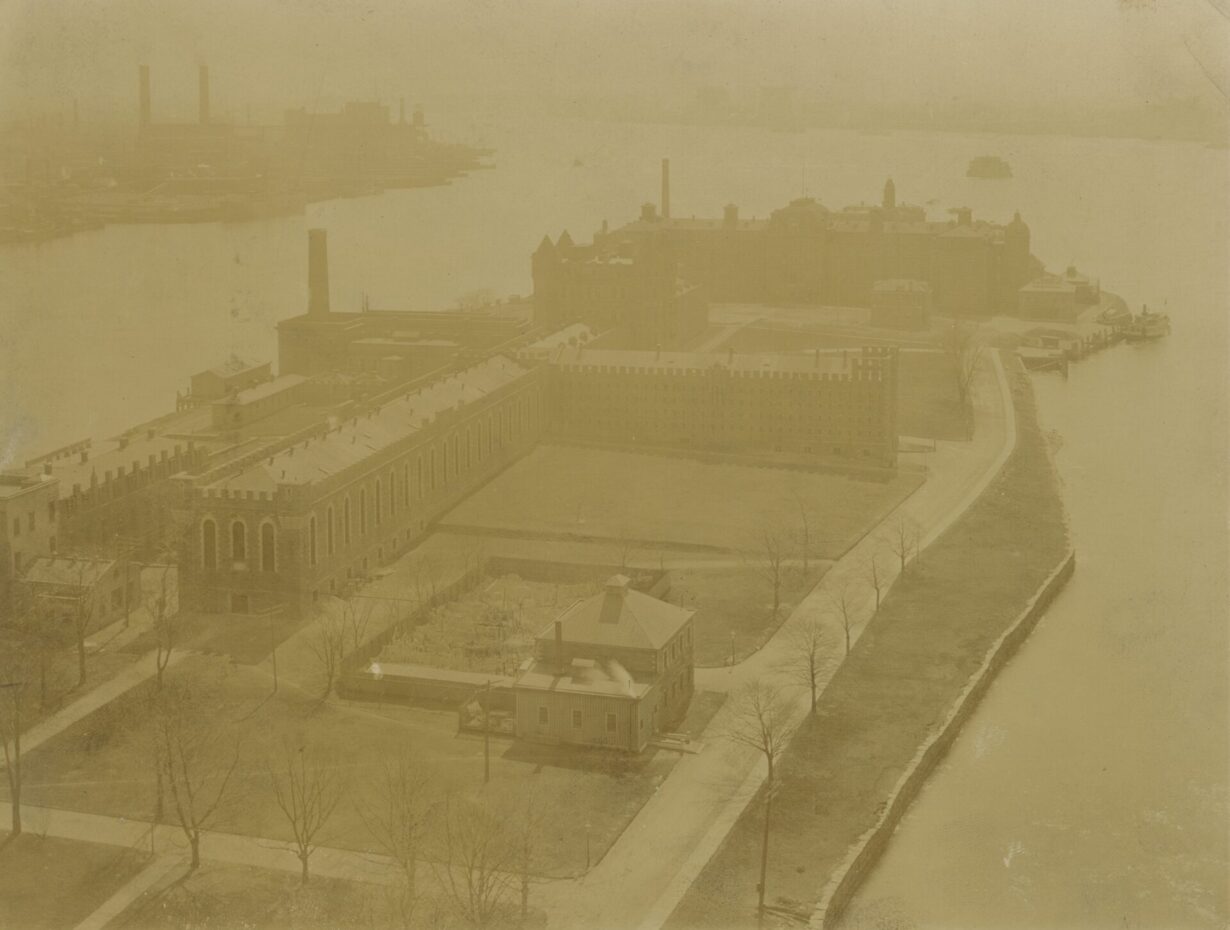
Marcella Percy Richardson was born on November 13, 1873 in Woodstock, Ontario. When she was a young child, her family moved to Saskatchewan. Her father, Hugh Richardson, was a Supreme court judge for the Northwest Territories in Regina, who most notably presided over the trial of Louis Riel during the 1885 Northwest Rebellion. Marcella attended boarding school at the Convent of the Congregation de Notre Dame in Ottawa and excelled her classes. In fact, in 1886 she received the Governor General’s medal for her academic excellence. Shortly after graduation, she moved to New York to train as a nurse at the Charity Hospital Training School on Blackwell’s Island (now known as Roosevelt Island).
Professional nursing was still a relatively new concept, with only a handful of institutions providing nursing instruction. Many Canadian women travelled to the United States to receive this education, which included hands-on experience caring for the sick. Marcella had found her calling. In 1889, after completing her certification, the school hired her as a supervising nurse to help train new students. She would stay in this position until the start of the Boer War.
What was the Boer War?
The Boer War (1899-1902), also known as the South African War, was a colonial conflict between Great Britain and the Boer Republics of South Africa: The South African Republic (Transvaal) and the Orange Free State. When Britain took control of parts of South Africa in the early 19th century, the Boers, who were primarily descendants of Dutch settlers, refused to submit to British Rule. Seeking to gain total control over the Boer Republics, Britain eventually declared war against the Boers in 1899. While primarily fought between two white colonial groups, thousands of Indigenous Africans served in both support and combat roles. The British also applied a scorched earth policy that destroyed Indigenous African farms and homes and created thousands of refugees. The British set up over 100 civilian “refugee” camps, which soon became known as concentration camps. Black Africans and Boers were confined in different camps; tens of thousands died of disease and starvation.
Canadians were divided over whether to get involved in the war. Many English Canadians believed it was Canada’s duty to help Britain, while many French Canadians, having their own strained history with British imperialism, felt sympathy for the Boers. However, after intense pressure, the government decided to send troops to South Africa. This marked the first time that Canada sent troops overseas for a foreign war. Over 7000 Canadians in three contingents served during the conflict. Canadians fought in many Battles in South Africa but are primarily remembered for their important role securing victory during the Battle of Paardeberg in 1900.
Read the rest of the article on Honouring Bravery
Written by Anthony Badame for Honouring Bravery.