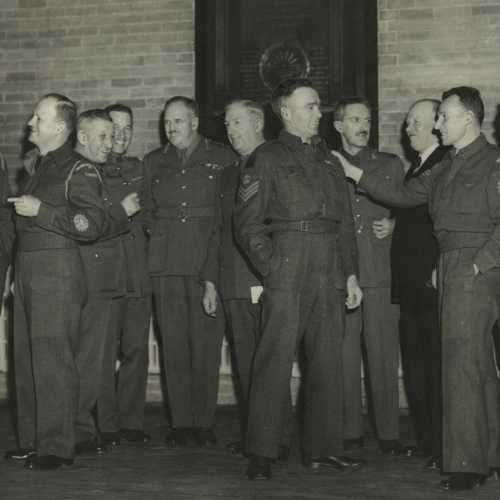
Now celebrating its centennial, the Royal Montreal Regiment of Westmount is one of the oldest military units in the Greater Montreal area. From the Great War to the present day, members of the RMR have distinguished themselves around the world, and their history is now preserved within the walls of their armoury.
Despite being firmly established at the center of the island of Montreal, the municipality of Westmount has always been historically different from the rest of the metropolis. Through their heritage, Westmounters take great pride in their city’s history and their attachment to the Royal Montreal Regiment (RMR) and its armory is proof of this. A jewel in the crown of Montreal’s military heritage, the RMR’s armory has been comfortably housed at 4625 rue Sainte-Catherine, close to the magnificent Westmount Park, for over one hundred years. Since its foundation, the RMR has become a fixture on the city’s skyline.
From its soldiers to its armory, we propose to you a brief summary of the regiment’s history and its place within Westmount’s panorama. Beginning from its foundation, in the midst of preparation for the Great War, the RMR has a legacy as strong as its battle feats.
World War I and the founding of the RMR
Like all Canadian regiments, the RMR has a long and sometimes complex lineage! Indeed, the RMR is the result of several Montreal-based units merging over the years. The situation is further complicated by the many changes in names, functions and structures from one conflict to the next. Basically, the creation of the first two corps of the RMR took place in the second half of 1914, in direct response to the outbreak of the First World War a few months earlier. Thus, its foundation came at a time when the federal government was increasing the number of soldiers in the army to meet the needs of this new conflict.
At the time, the island of Montreal had several militia regiments to protect its territory from enemy invasion. Indeed, as Canada was still a young nation at the time, it was rare for army units to be sent overseas. The First World War changed this situation, and the creation of the RMR was part of this trend, with the establishment of two distinct corps: an expeditionary corps and a reserve corps. While the latter’s mission was to protect the city from potential enemy invasion, the former was sent to Europe shortly after its creation.
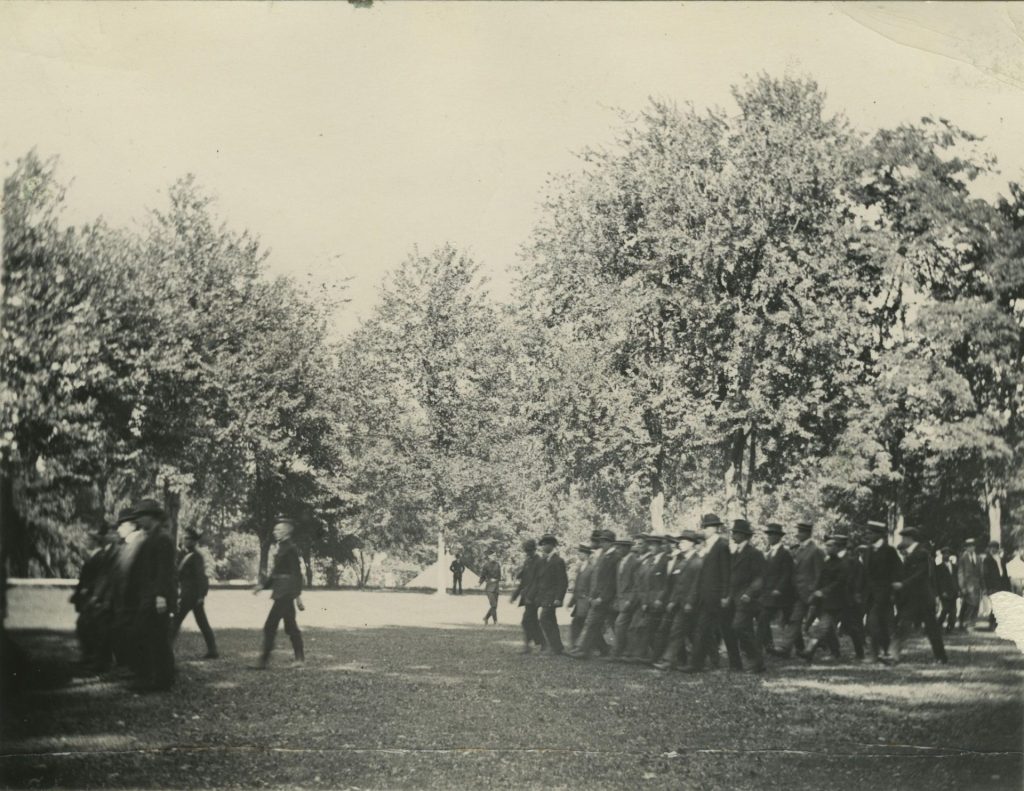
Both corps of the RMR recruited their members from the young men of the Westmount and Montreal areas. What sets the new regiment apart, however, is that it is one of the first officially bilingual units. Indeed, at its foundation and in addition to new recruits, the RMR integrates elements from two English-speaking regiments (the 1st Regiment of the Canadian Grenadier Guards and the 3rd Regiment of the Victoria Rifles of Canada) as well as one French-speaking regiment (the 65th Regiment of the Carabiniers Mont-Royal).
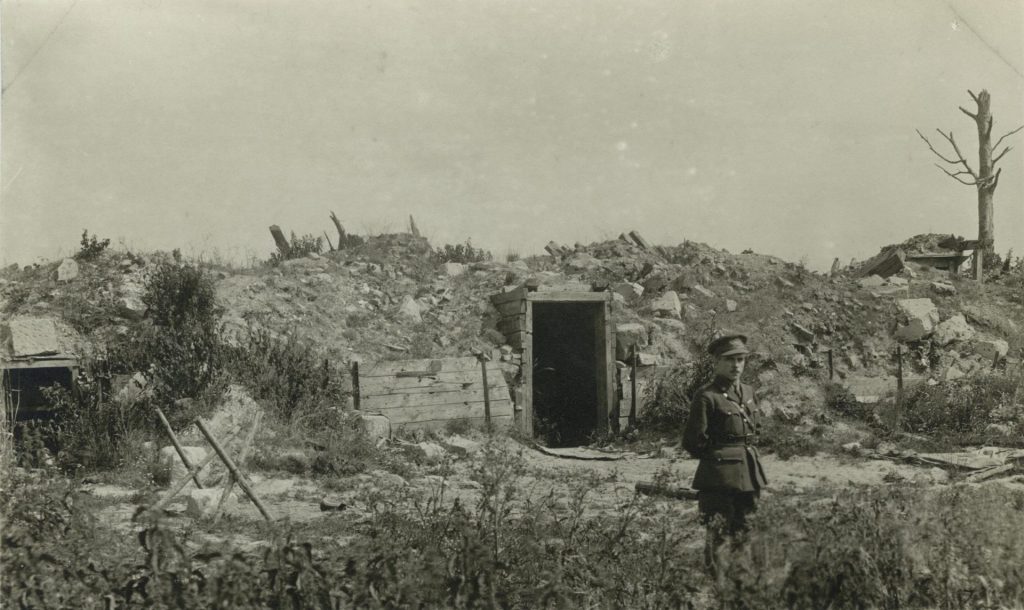
In Europe, the RMR spent six months in intensive training before being sent to the trenches. There, it saw its first combat during the Battle of Ypres, from April to May 1915. This first litmus test was, however, particularly terrible for the new recruits as it was there that the German army used poison gas for the first time on the Western Front. The attack resulted in heavy losses for the Canadian army, with over 5,000 casualties in just a few hours.
Read the rest of the article on Quebec Heritage News
Article written by Julien Lehoux for Je Me Souviens. Translation by Amy Butcher (www.traductionsamyb.ca). The article is also available in the Spring 2022 issue of QHN and available here. To see more articles like this one, check out their archive. In 2025, the Royal Montreal Regiment published an updated version of its regimental book: Glory Never Dies, available for purchase online! Finally, we also invite you to visit the Royal Montreal Regiment Museum website.