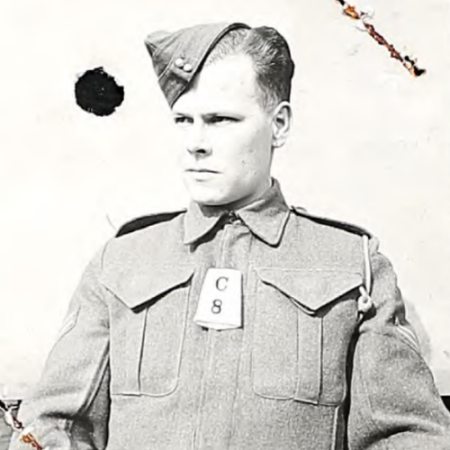
Far from the front lines, important meetings were held during World War II to determine the course of the war. Two of these meetings took place in Quebec City: in 1943 and 1944. Find out what the Allied leaders discussed during these conferences!
It is common knowledge that representatives of the Allied nations regularly held meetings during the Second World War. Today, the most well-known meeting of these heads of state is probably the Yalta Conference (February 4 to 11, 1945), where Franklin D. Roosevelt, Winston Churchill, and Joseph Stalin met to finalize the end stages of the war. Overall, the Allies met 31 times during the war to discuss their strategies! Quebec City hosted two of these conferences: one in 1943 and one in 1944.
The First Quebec Conference: August 17 to 24, 1943
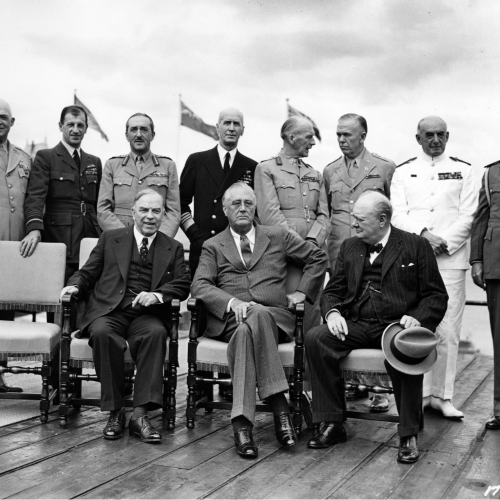
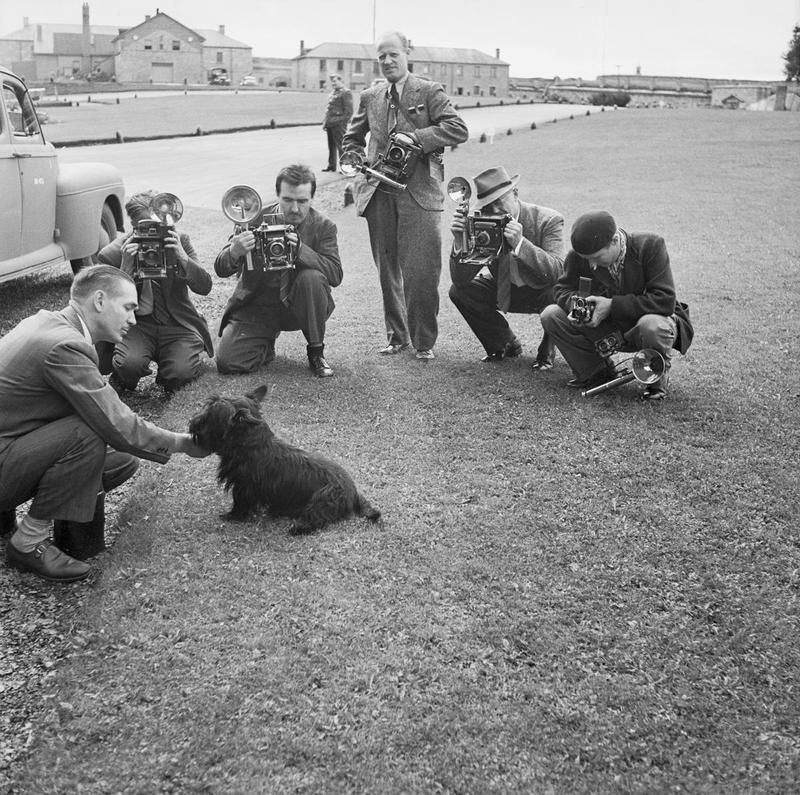
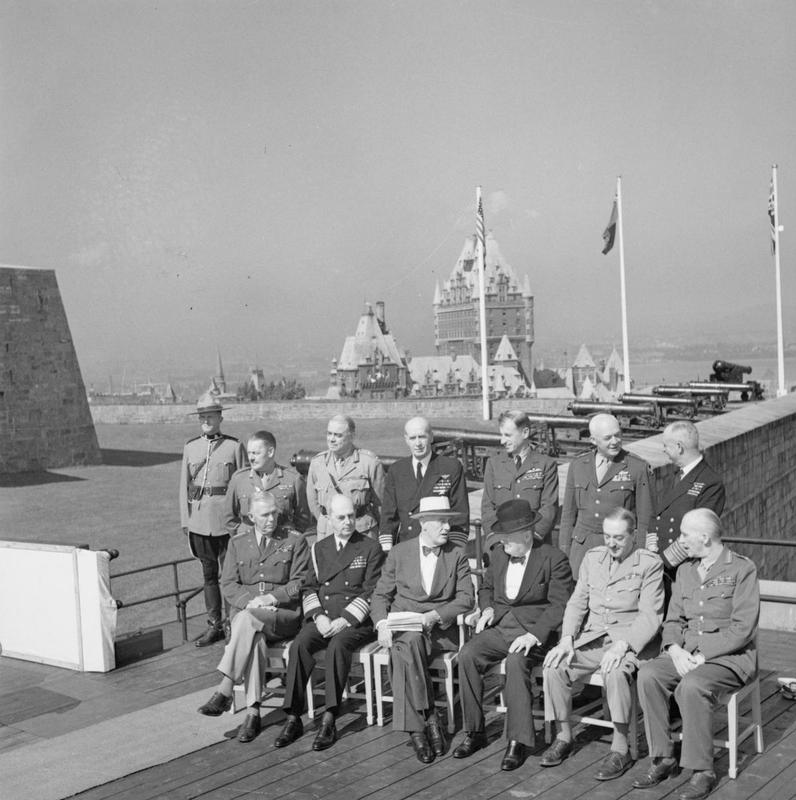
The First Quebec Conference was held at La Citadelle and the Château Frontenac and was attended by U.S. President Franklin D. Roosevelt and British Prime Minister Winston Churchill. For security purposes, the conference was kept top secret with no media coverage announcing that these heads of state were coming.
Canadian Prime Minister William Lyon Mackenzie King was not meant to take part in the discussions, as Quebec City—and by extension Canada—was merely acting as a host for the two superpowers. Churchill suggested that King join the discussions, given Canada’s involvement in the conflict. In fact, Canada had made substantial military contributions in Hong Kong, at Dieppe, and in Sicily by that stage of the war. Roosevelt did not agree to this suggestion, fearing it would set a precedent for other “minor” allies, such as Brazil, China, or the other British dominions, to participate as well. Given that Roosevelt and Churchill were generally suspicious of one another, perhaps the U.S. president feared Canada would have given its unconditional support to Great Britain during the discussions? In any event, King did not insist on participating, as he was content to serve as host and liaison between his allies.
This first conference in Quebec City was significant, as this was when the Normandy landings were officially planned. The decision to cross the English Channel in 1944 had already been made at the Third Washington Conference (in May 1943), but the plan was finalized and officially designated as Operation Overlord in Quebec City. However, other options were discussed, such as a landing in Norway or the complete liberation of Europe through Italy.
In fact, the full liberation of Sicily was officially decided on August 17, or the very first day of the conference! It was also in Quebec City that these leaders decided to continue their campaign in the Italian peninsula with an invasion on September 3 to force Mussolini’s regime out of the war.
They discussed other points related to the Pacific War, the most important being the strategy for the atomic bomb, a weapon that the United States was in the middle of developing at the time. In Quebec City, Roosevelt and Churchill signed an agreement that the bomb would never be used against each other or without their mutual consent. The Quebec Agreement also set out that the two countries would cooperate to develop nuclear weapons. Although not a signatory to this agreement, Canada became a valuable partner in the project by providing significant resources as well as laboratories and testing sites.
The mishap of Sergeant Major Couture
Sergeant Major Émile Couture of the Royal 22e Régiment was in charge of “logistics” during the conference (i.e., he was asked to clean the offices after the meetings!). Once the final meeting at the Château Frontenac was over, young Couture found a leather portfolio with the words “Churchill-Roosevelt, Quebec Conference, 1943” embossed in gold. Assuming its contents were inconsequential, the soldier took the portfolio home as a souvenir. When he returned to his home in Lac-Beauport, he eventually realized what he had in his possession: top-secret documents fully outlining the Normandy landings. With the operation ten months away, these details were supposed to be top secret! Panicked, the Sergeant Major hid the documents under his mattress and gave them to his superior the next day. After a long investigation involving the American and British intelligence agencies, Couture was cleared of all suspicion, and he agreed to keep mum about what he knew until the end of the war.
The story of Sergeant Major Couture is now commemorated at the Royal 22e Régiment Museum, and many of his personal items have been preserved in the museum’s collections.
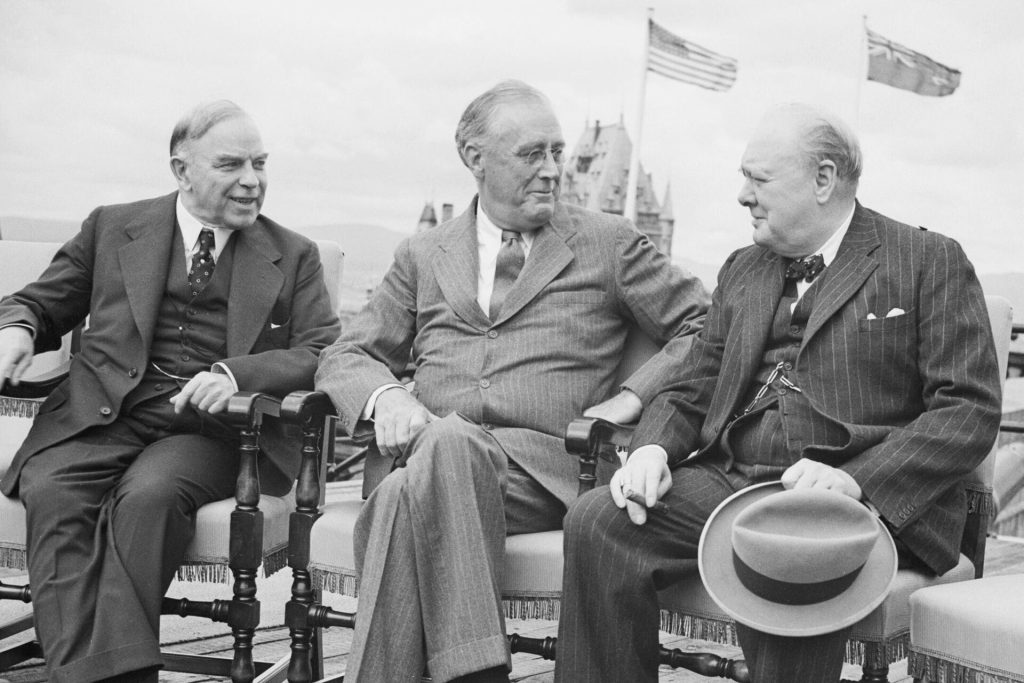
The Second Quebec Conference: August 12 to 16, 1944
The second Quebec Conference was not as impressive as the first in terms of the topics discussed, but it was interesting nonetheless! At the time, it was clear that Germany was nearing defeat: the Normandy landings had been a complete success, the liberation of Italy was well underway, and the Red Army had gained a full advantage in the east. In fact, most of the conference focused on the Morgenthau Plan for the postwar occupation of Germany.
Devised by U.S. Secretary of the Treasury Henry Morgenthau, Jr., the plan aimed to demilitarize Germany by dismantling its arms industry and factories. The plan also included relocating millions of German workers across the United States, the Soviet Union, and the far reaches of the British and French empires as “reparations.” Although the Morgenthau Plan was controversial even for the Roosevelt administration, it was nevertheless discussed in Quebec City with Churchill, who had reservations about multiple points. The plan was ultimately replaced by the Marshall Plan a short time later. However, the Quebec City Conference set out the broad strokes for Germany’s postwar occupation.
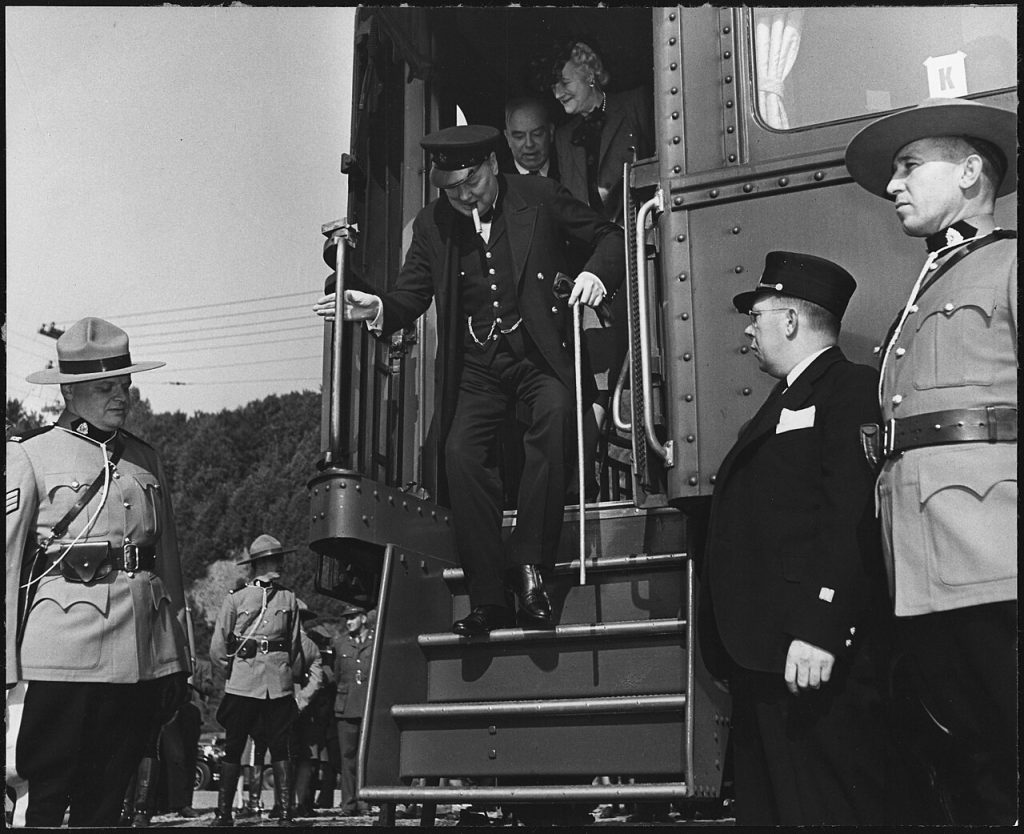
Of course, the Americans and the British discussed other matters at the conference, such as the extension of the Lend-Lease Act for Great Britain, the Royal Navy’s involvement in the war against Japan—and the use of the atomic bomb against this country. The second Quebec Conference was a continuation of the first on this issue, as the two allies came to an agreement about the bomb’s potential initial uses.
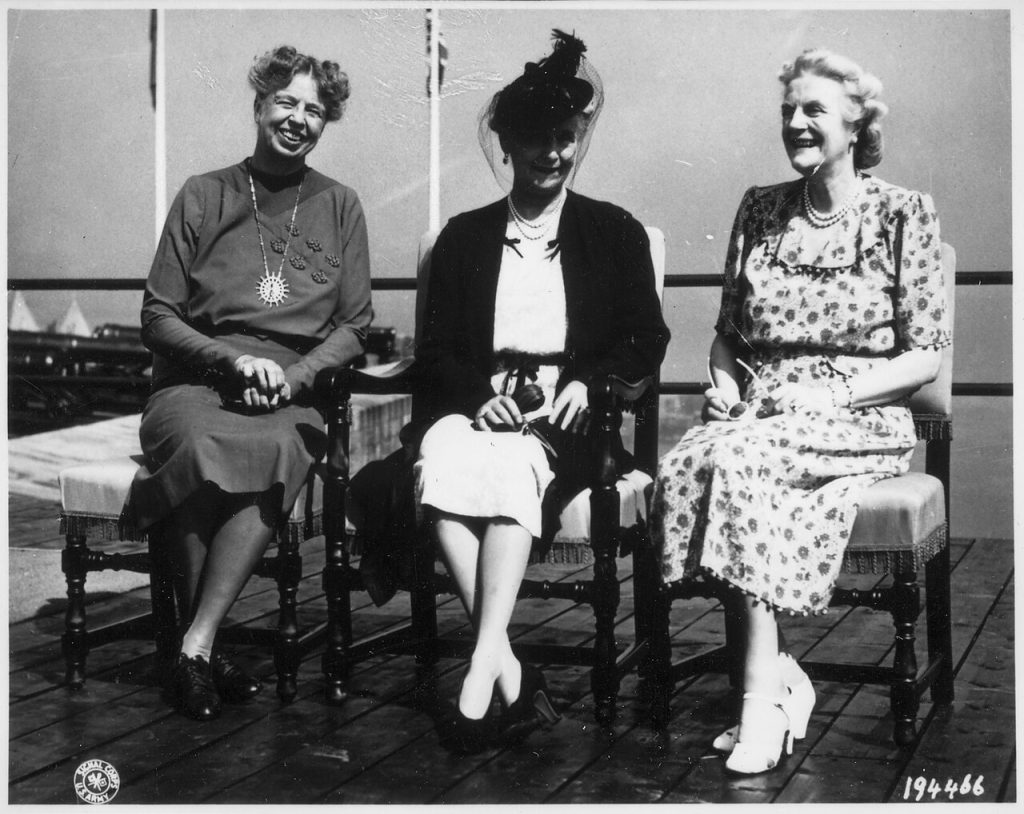
A role in shaping the war
As mentioned above, the Allied leaders met multiple times during the war, and the Quebec conferences represented just two of these occasions. However, these events did have an impact, as crucial discussions took place at these events that determined how the war would unfold—from the Normandy landings to the development of the atomic bomb.
Both conferences were top secret and only later publicly reported in the media. They are now considered defining moments of the war for Quebec City, which can say that it hosted discussions that shaped the future of the world.
Article written by Julien Lehoux for Je Me Souviens. Translation by Amy Butcher (www.traductionsamyb.ca).
Sources:
- “Hommage au soldat québécois dont le silence a (peut-être) permis de vaincre Hitler“, Radio-Canada (in english).
- “Planifier la victoire“, Le Beaver (in english).
- “Quebec Conference“, Britannica.