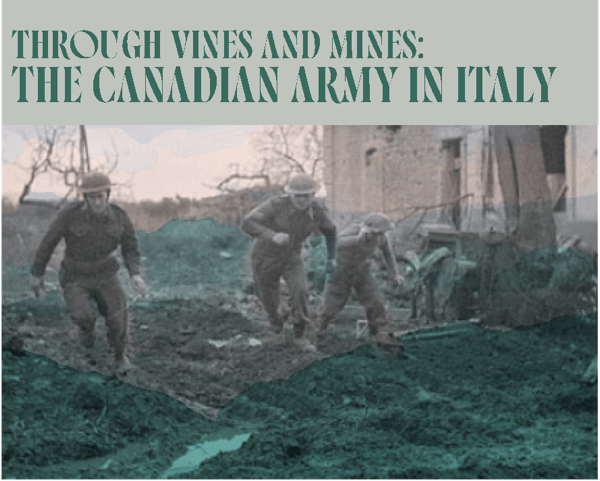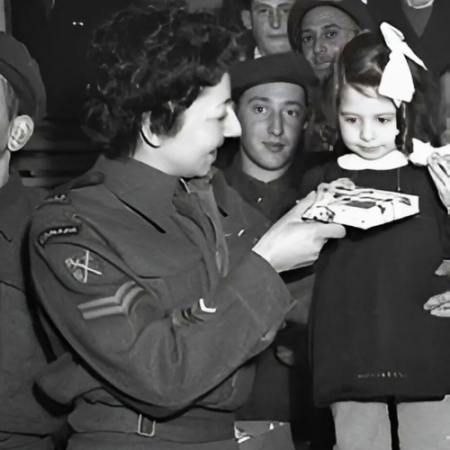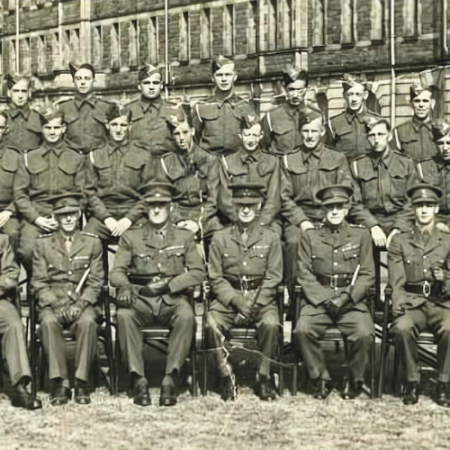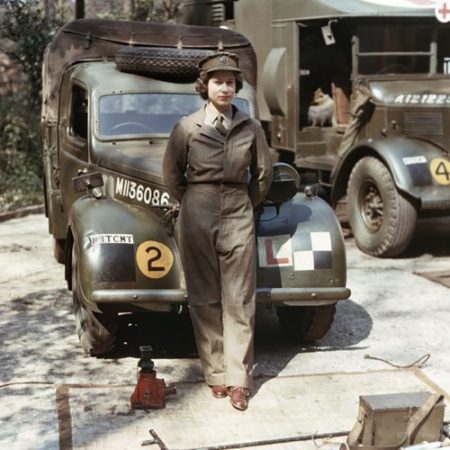
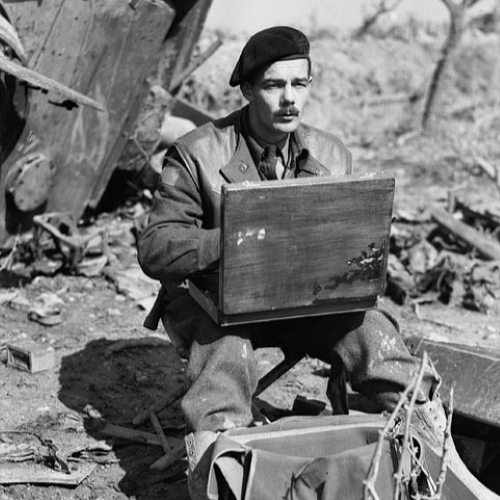
A large number of artists, historians, and journalists accompanied the Canadian Army during the Italian Campaign to document and report on events at the front. Discover their work, in images and text, from these men who came to witness the fighting firsthand.
Starting with the Sicily landings in July 1943, the Italian Campaign was the first major operation during the Second World War that involved the Canadian Army. Unlike previous Canadian missions, the Italian campaign was massive in terms of both troop numbers and duration.
As the Canadian government wanted to get the media involved as much as possible to document the operation from start to finish, the Army deployed different artists, journalists, and historians directly in the field. While embedded with the troops on the ground, these professionals used their specific mediums to capture everything they saw with their own eyes. Read on to discover what their photos and words revealed about the campaign.
Visual artists
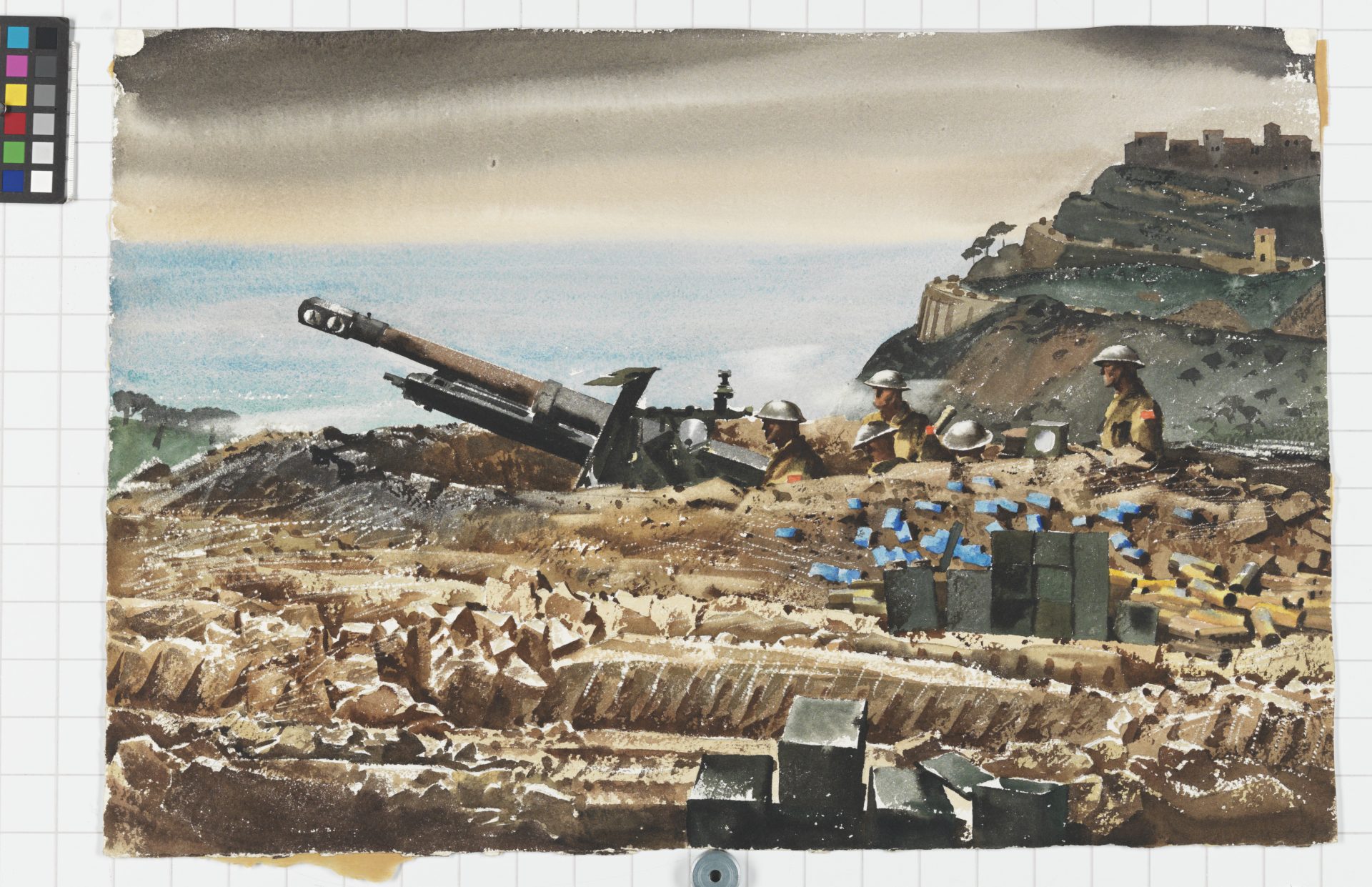
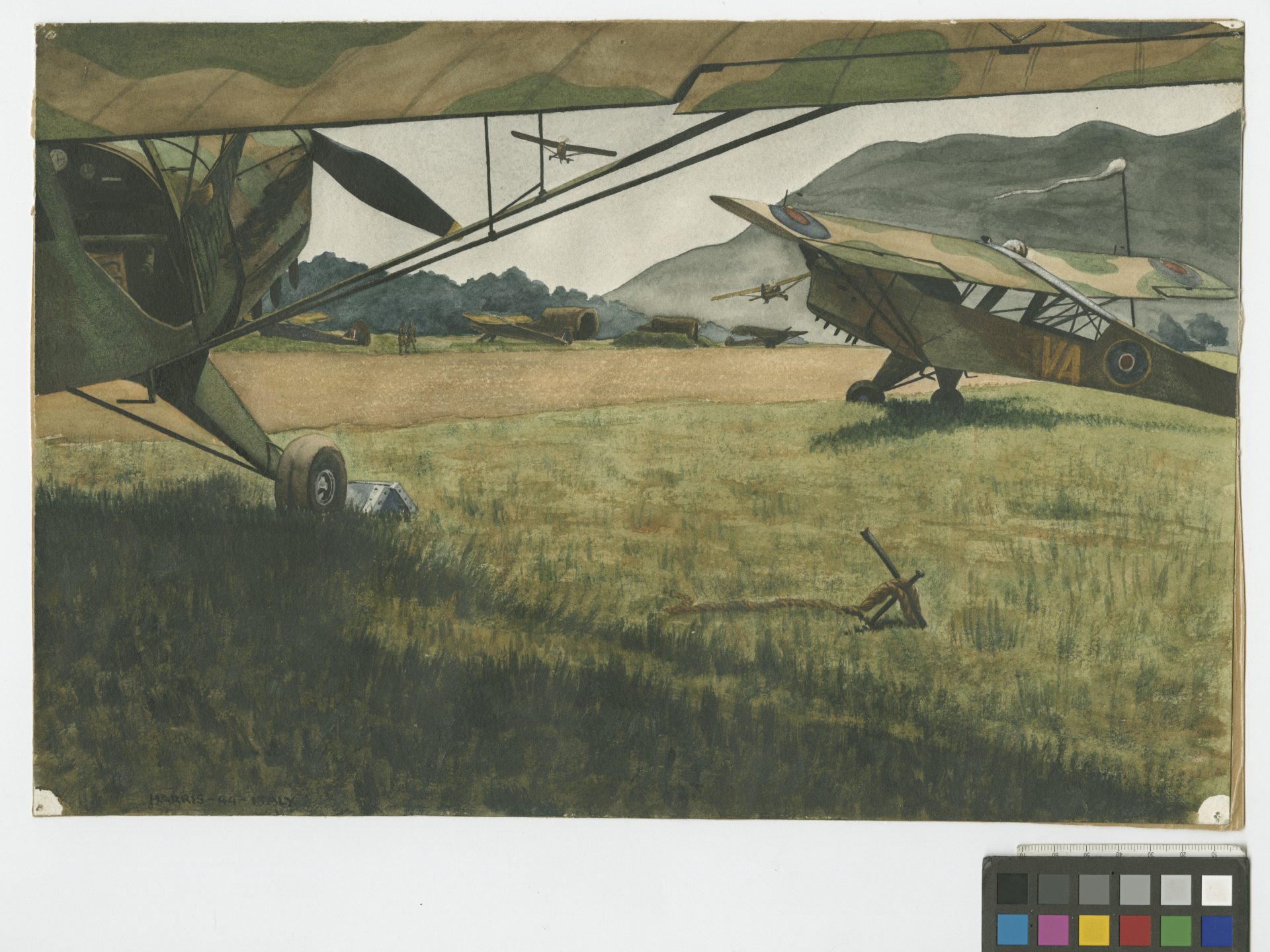
The tradition of embedding visual artists with the army began during the First World War with the goal of documenting the experience at the front for propaganda and posterity. Many artists were deployed to depict scenes of combat and downtime. Hundreds of paintings were produced, and the program was considered a great success for the government.
The program was revived in 1943, and many people were recruited to illustrate the greatest conflict in history. Artists such as Molly Lamb Bobak, for example, were sent to locations across Canada and Europe to accompany the different branches of the Army.
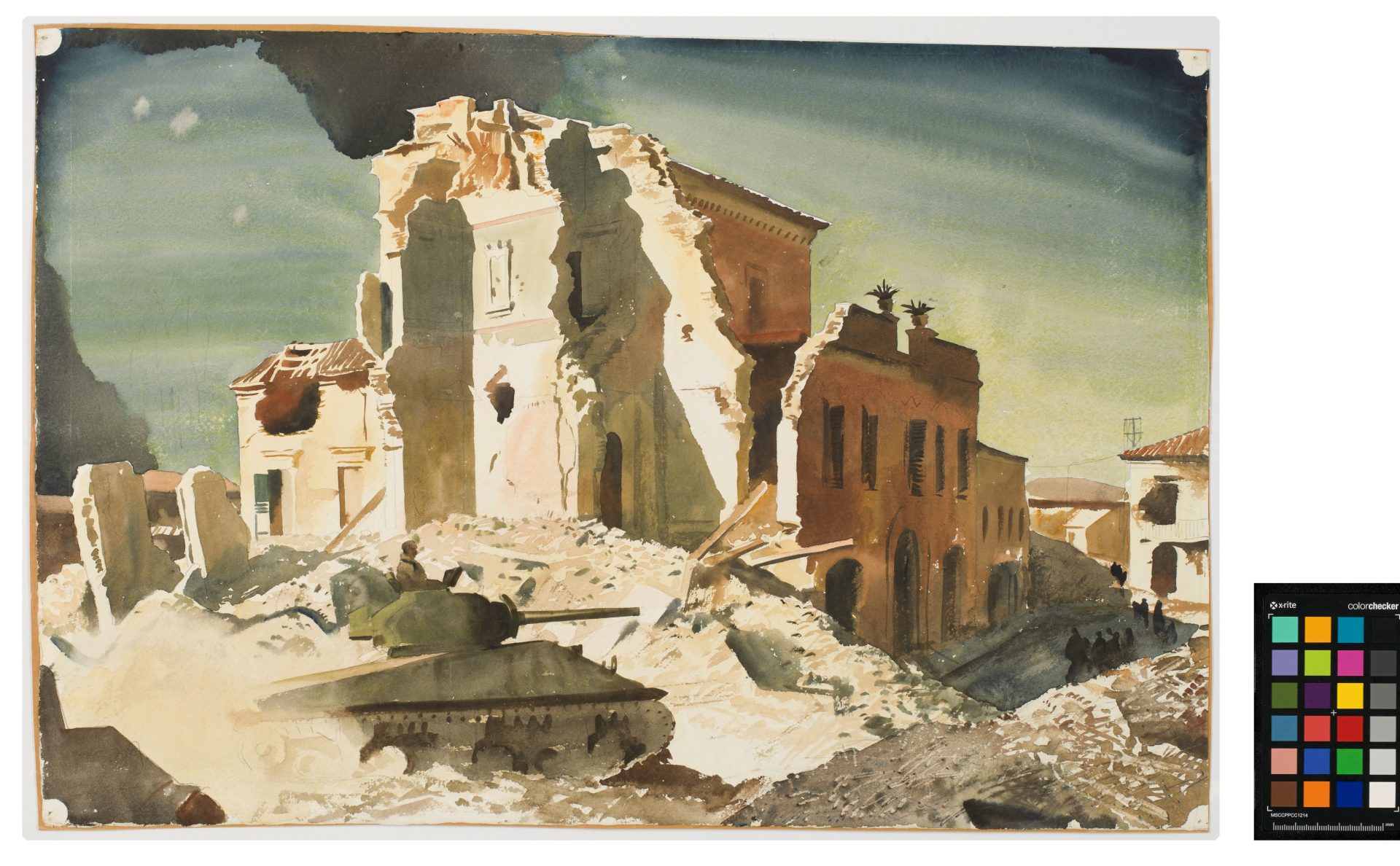
Other artists also went with soldiers to the front. After working with the Art Association of Montreal (the predecessor of the Montreal Museum of Fine Arts), Will Ogilvie joined the Canadian Army in 1940. He followed the troops in Sicily and Italy before heading off to Normandy in 1944. Charles Comfort, one of the most well-known military artists, travelled to Italy in November 1943. While there, he created a number of important paintings of the Battle of Ortona, which took the lives of many soldiers.
The Army was not the only military branch that brought artists into service. Paul Goranson, from Vancouver, joined the Royal Canadian Air Force (RCAF) in 1941 and became one of its first artists to be sent overseas. He then accompanied the RCAF on its missions to North Africa and Italy, where he made paintings imbued with a high degree of realism.
The works by these artists are now preserved at the Canadian War Museum. In addition to a variety of artifacts from the First World War and overseas operations after 1945, the Museum’s collection includes over 12,000 works of art. These pieces are regularly put on display in exhibitions that draw from its reserves, such as the virtual exhibitions Women in Service – The War Art of Molly Lamb Bobak and Art and War.
Visual artists were not the only ones working out in the war field. For example, while Charles Comfort worked on his paintings, historian Samuel Hughes would write his texts.
Historians
As it did with visual artists, the Canadian military began embedding professional historians to document its involvement in the First World War. This project led to the 1938 publication of the Official History of the Canadian Forces in the Great War, 1914-1919. Although the Canadian War Narrative Section (CWNS) was formed during the First World War, it continued throughout the Second World War as well.
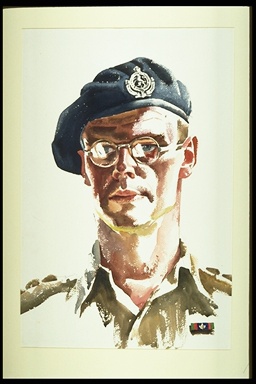
As historian Charles Perry Percy explains in the preface to The Canadian Army, 1939-1945 (published in 1948), a historical officer and a war artist, each with their own clerk and personal driver, were typically embedded with every major military operation. Three military historians—captains Eric Harrison, A. T. Sesia, and Sam H. Hughes—were sent to Italy to document the campaign.
These three historians accompanied artists and journalists to report on daily events by gathering information from officers and soldiers in the field, reading battle reports, studying paintings depicting the fighting, and keeping military diaries. This was a highly collaborative effort that involved checking facts and shaping a clear narrative for the public. In December 1943, Hughes and Comfort published a booklet entitled From Pachino to Ortona that recounted their research at the front in Sicily and Italy.
While artists captured scenes for posterity, historians did the same through their research and writing. Their work served multiple purposes. First, military experts could use their research to analyze the reasons behind successful and failed operations. Volumes of books and articles also provided the public with detailed information about Canada’s military involvement in the conflict. However, the propaganda angle of these publications should not be overlooked. While their historical value is undeniable—both for the general public and for researchers—these works were also used to develop Canada’s identity through war.
While artists captured scenes for posterity, historians did the same through their research and writing. Their work served multiple purposes. First, military experts could use their research to analyze the reasons behind successful and failed operations. Volumes of books and articles also provided the public with detailed information about Canada’s military involvement in the conflict. However, the propaganda angle of these publications should not be overlooked. While their historical value is undeniable—both for the general public and for researchers—these works were also used to develop Canada’s identity through war.
The work of historians in Italy was highly significant and, years after the war, led to a second volume of the Official History of the Canadian Army in the Second World War in 1956—a reference that continues to hold historical relevance.
Journalists
“Although I was unable to reach the battalion’s advanced positions today—any movement under the enemy’s full view would have brought down a deluge of shells on the troops—, I nevertheless ventured fifty yards beyond our machine guns and their incessant jabbering; the sentry […] reassured me that our fire was going high over our heads toward the enemy. […]”
A quick crank of the field telephone connected me to Captain Yvan Dubé from Sayabec, who was set up in a trench with Lieutenant Yves Beaulieu from Lévis.
‘We don’t dare stick our heads up,’ said Dubé. ‘The landscape is barren, and the Jerries can clearly see us from their positions nine hundred yards away.’
‘This morning we sustained mortar fire, and a shell broke off a tree branch that fell into the trench of stretcher-bearer J.-E. Pelletier. Thankfully, the shell didn’t explode! Pelletier is still with us.’“
– Translated excerpt from an article by Maurice Desjardins on news about four Quebec officers fighting in Italy.
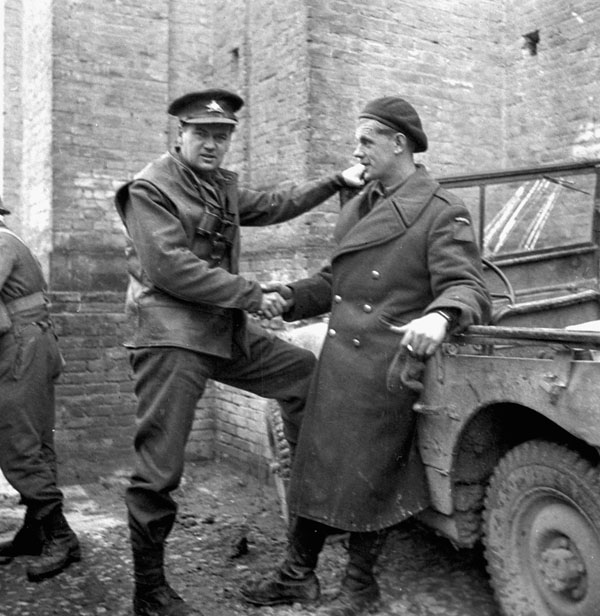
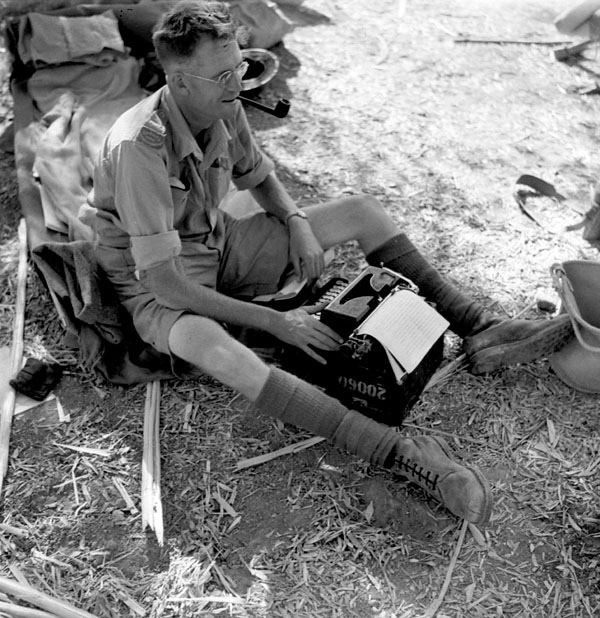
Maurice Desjardins was one of the few Francophone journalists sent to Italy during the war. Unlike historians who documented events for the future, journalists had to report on the present. At the time, major media outlets hired war correspondents to follow the troops. Their writing and photos brought war news from the front lines to the rest of the country.
However, they were also subject to strict censorship policies, which could complicate their work. While they had to report the news as accurately as possible, journalists also had to avoid jeopardizing military operations by releasing information that could help the enemy. Aside from the major events officially announced by the military, such as the capture of Rome or the victory at Ortona, journalists could only reveal details from everyday life at the front. Accounts of major battles were published along with articles on skirmishes or anecdotes and impressions of the deployed soldiers.
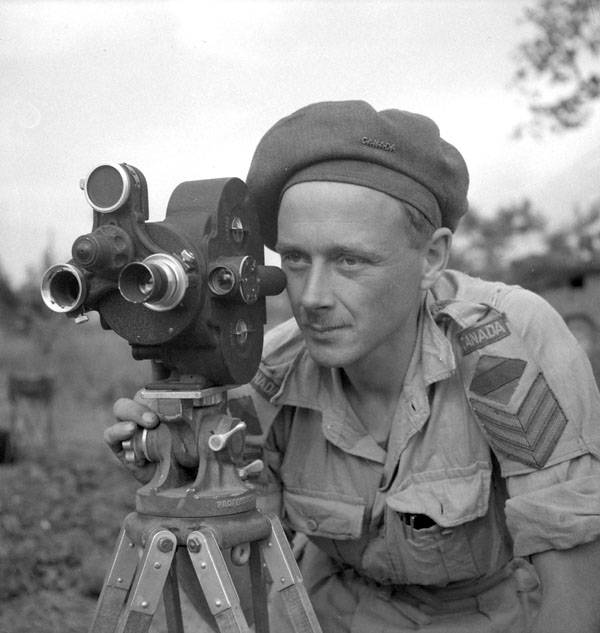
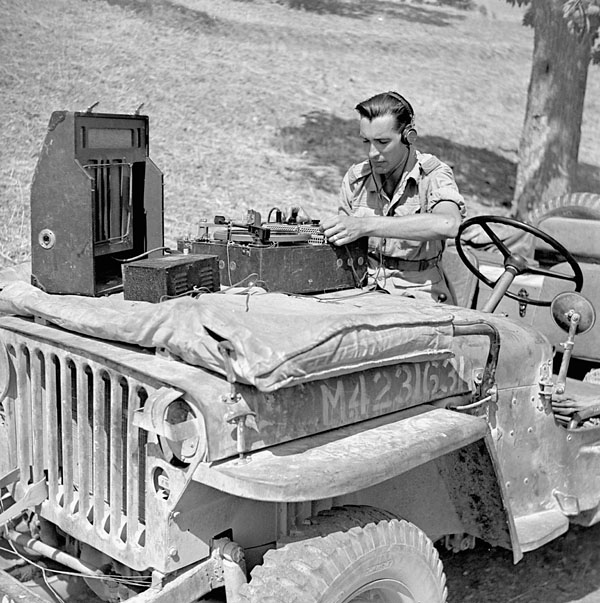
Many other Canadian journalists, in addition to Maurice Desjardins, also left for Italy. For example, Peter Stursberg enlisted in the Canadian Navy in 1942 while he was still working for the CBC. He was one of the first Canadian journalists to accompany the troops to Sicily, and he was even there for the liberation of Rome.
His colleague in Sicily, Ross Munro, already had extensive experience as a war correspondent from the start of the conflict—even before he made it to the island—, as he was one of the rare journalists who had covered the Dieppe raid on August 19, 1944. After his long stint in Italy, Munro returned to France, where he reported on the Normandy landings on June 6, 1944. In recognition of his impressive work, the Ross Munro Award has been presented since 2002 to Canadian journalists that tell stories relating to the national defence.
Revealing the reality of war
During the Second World War, the visual and written depictions of artists, historians, and journalists were as important as soldiers’ fights on the battlefield. These professionals risked their lives to bring home the reality of the fighting in a variety of mediums to help civilians understand what war was really like. From the intense compositions of paintings to carefully documented texts, their work has left a vivid legacy showing the experiences of our deployed service members.
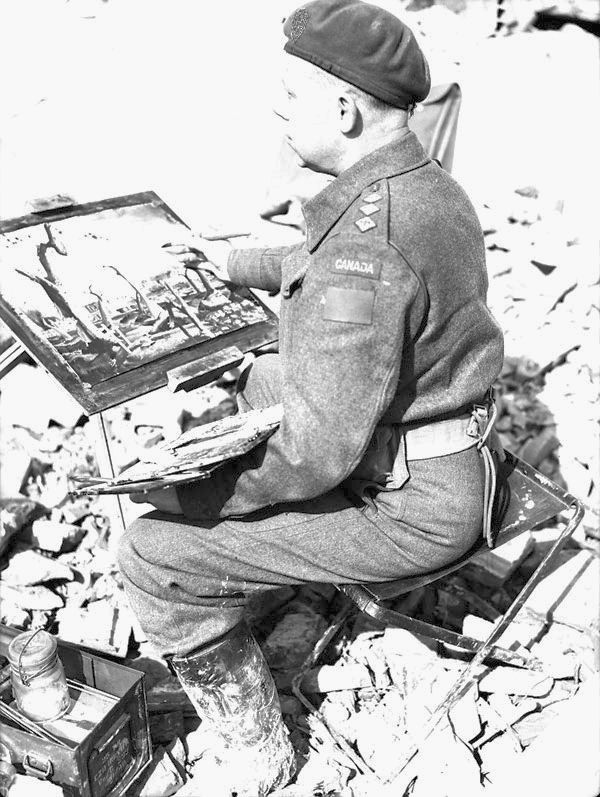
Cover Photo: Captain Lawren Phillips Harris sketches a war scene somewhere near Ortona. During the campaign, Harris accompanied the 5th Armoured Brigade of the 5th Canadian (Armoured) Division as they advanced toward Ortona along the Melfa and Liri rivers (source: Library and Archives Canada).
Article written by Julien Lehoux for Je Me Souviens. Translated by Amy Butcher (traductionsamyb.ca).
Sources:
- “Canada’s War Art“, Musée canadien de la guerre/Canadian War Museum.
- “Canadian War Art Programs“, L’Encyclopédie canadienne/The Canadian Encyclopedia.
- “History of the Canadian Forces Artists Program“, Anciens Combattants Canada/Veterans Affairs Canada.
- “Marcel Ouimet, la guerre et la radiodiffusion canadienne“, Radio-Canada (in french).
- “Marcel Ouimet, voix canadienne-française de la 2e Guerre mondiale“, Radio-Canada (in french)..
- “War correspondents“, Musée Mémorial Bataille de Normandie.
For a more academic approach:
- Laura Brandon, “In Memoriam: Charles Comfort: War Artist — 1900–1994“, Canadian Military History, vol. 3, no. 2, 1994, pp. 95-96.
- Laura Brandon, “Orville Fisher, Official War Artist (1911-1999)“, Canadian Military History, vol. 9, no. 1, 2000, pp. 56-59.
- Laura Brandon, “Obituaries: Paul Goranson, Michael Forster & Caven Atkins: Canadian War Artists“, Canadian Military History, vol. 11, no. 4, 2002, pp. 53-58.
- Christine Leppard, “Documenting the D-Day Dodgers Canadian Field Historians in the Italian Campaign, 1943-1945“, Canadian Military History, vol. 18, no. 3, 2015, pp. 7-18.
- Mary Mackie, “Charles Comfort: Soldiering Artist 1943–1945“, Canadian Military History, vol. 4, no. 1, 1995, pp. 106-112.
- Tim Cook, “Obituary: Sam Hughes, Historical Officer“, Canadian Military History, vol. 12, no. 2, 2003, pp. 56-59.
This article was published as part of our exhibition on the Italian Campaign: Through Vines and Mines. Visit our exhibition to learn more about the history of the Canadian soldiers and nurses sent to Italy!